
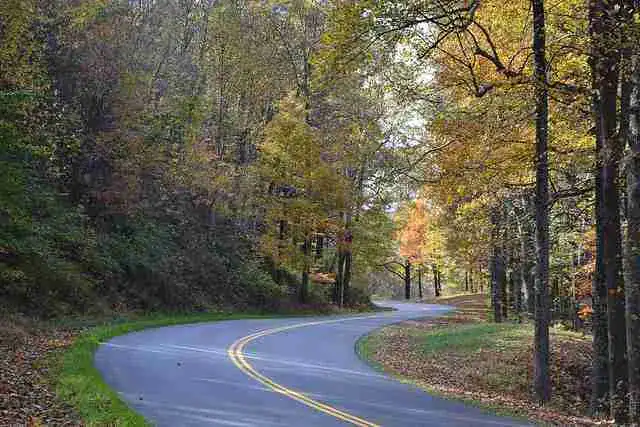
This Blue Ridge Parkway getaway guide makes exploring the Plateau and Highlands sections easy to follow, whether you drive north or south.
It’s best to get an early start. In the morning, the Blue Ridge Parkway is cool and quiet. Sunlight filters through the trees, illuminating the mist; the only sounds are the rustle of leaves and the calls of mountain birds. Traffic is sparse or nonexistent. There are no billboards, roadside businesses, or advertising. Traffic lights are rare. The Parkway offers a peaceful, pleasant drive with stunning vistas.
The Parkway spans hundreds of miles, but most travelers find themselves drawn to the middle. There, the land rises and falls in a natural rhythm. The Plateau carries a grounded feeling. The Highlands lift everything toward open sky. Together, they offer a weekend or a full week of easy motion, quiet trails, and small towns that welcome wanderers without trying too hard.
This guide introduces both regions and helps you choose how to explore them. You don’t need local knowledge to get started. You only need a map, a tank of gas, and some time to let the ridges show you their pace. The route settles into a pace that works well for a Blue Ridge Parkway getaway.

The Parkway as the Centerline
The Blue Ridge Parkway covers 469 miles between Virginia and North Carolina. Still, the stretch that runs between the Plateau and the Highlands carries a distinct sense of place. You pass farm meadows that haven’t changed in years, then climb into air that smells sharper and cooler. The change happens in quiet increments. You barely notice until a curve opens into a view that seems to stretch farther than the last.
This center section of the Parkway provides optimal access. Roads stay manageable, the miles between stops stay short, and towns sit close to the route. Travelers often build an entire Blue Ridge Parkway getaway around this middle run because it offers a complete experience without requiring long drives or complicated planning.
Consider this your Basecamp. Each part of this guide branches to places you can explore without losing the thread of the road.
The Plateau Region: Rooted in Rhythm
You’ll rise from about 1,000 feet on the Piedmont to 3,000-plus feet on the Plateau. You’ll be surprised by the rise from the flat Piedmont up to Virginia’s Blue Ridge Plateau. Pastures roll beside the Parkway, small farms work steady hours, and the towns that dot this region keep their doors open in familiar ways. You feel it most in places like Floyd, Meadows of Dan, Galax, and Fries. Each town has its own personality, but the shared sense of rhythm ties them together.

You can start in Floyd if you enter from the north. Floyd works well as part of a Blue Ridge Parkway getaway, especially for visitors who want music and walkable streets. The streets feel lively on weekends, but not rushed. Music slips out of open doors at the Floyd Country Store, and local shops stay within an easy walk. Most travelers make this their first stretch. It takes little effort to step into the town’s cadence, but once you fall into it, the rest of the Plateau feels natural.
Meadows of Dan sits a short drive south. Here, the headwaters of the Dan River rise from underground streams to begin their journey down the mountain to the Kerr Reservoir. The name fits: Meadows. Here, the land widens and the elevation softens the heat in summer. Coffee shops, country stores, and trails sit close together. This makes Meadows of Dan a worthwhile stop for anyone lingering on the edge of the Plateau. You’ll find access points to shorter walks, picnic areas, and scenic spots where you can stop the car and take in the view of the ridge.

Galax lies seven miles west of the Parkway, but its music heritage makes it worth the short drive. Old-time tunes built much of the area’s identity. The city has earned its nickname, “The World Capital of Old-Time Mountain Music.” Legends of Old-Time music like the Stonemans, Eck Dunford, and the original Hillbillies hail from here. And let’s not forget the world-famous Galax Old Fiddlers’ Convention, now in its 85th year. Visitors who arrive on the right evening will hear this music firsthand in venues that still welcome pickers and singers who carry the tradition from one generation to the next. Fries, tucked along the New River, adds another layer. The town stays quieter, and the river keeps the air cooler in summer.
Each of these stops offers a different angle on the Plateau, but all of them share an approach to time that feels consistent. You work when work needs to be done, rest when the sun sets, and keep company with the land rather than pushing against it.
Plateau Highlights and Practical Stops
Mabry Mill remains a familiar stop for anyone planning a Blue Ridge Parkway getaway. The waterwheel mill, the reflection pond, and the visitor’s center give travelers an easy place to stretch, breathe, and take a few steps into the past.
Parking stays straightforward in this region, and most viewpoints lie close to the road. Visitors looking for a smooth-paced day often combine a stop at Mabry Mill with a drive to the Blue Ridge Music Center near the state line. The outdoor stage and museum offer a clear window into the area’s musical roots.
Road conditions on the Plateau stay consistent throughout the year, though winter can bring closures on short notice. Spring invites early blooms, and summer covers the hills in green. Fall draws steady traffic, but the color changes slowly enough that you rarely feel crowded out.

The Highlands Region: Lifted by the View
The tone shifts as the Parkway enters the high country. The temperature drops. The ridges sharpen. Towns cling closer to the mountainside. Travelers notice the change whether they climb into the region from the north or descend into it from the south. The Highlands carry an unmistakable lift.
Boone anchors the northern end of this region. As a college town, it keeps steady energy throughout most of the year. Visitors find trails, restaurants, bookstores, and outfitters without straying far from the Parkway. For many, Boone becomes a natural base before moving deeper into the Highlands.
Blowing Rock sits a short drive away. The town feels compact and walkable. Shops line the downtown streets, and most visitors find meals, snacks, or afternoon treats without looking far. The town’s overlook gives a panoramic view toward the lower lands to the east. During brighter days, the horizon reaches farther than expected.
Linville brings travelers closer to the rugged side of the Highlands. The land rises quickly, and the terrain offers some of the most recognizable views along the Parkway. Trails around Linville Gorge draw hikers of varying comfort levels. The overlooks remain accessible for those who prefer to keep to the road.
Grandfather Mountain, altitude 5,946, stands at the center. This landmark gives the region its shape. The view from the top, when weather allows, stretches across layers of ridges with a clarity that often surprises visitors familiar with hazier valleys. The area around the mountain holds nature trails, picnic spots, and a swinging bridge that offers a high vantage point without requiring a long climb.
These towns and natural features create a region that welcomes both slow travel and active exploration. You can hike, shop, or simply drive without pushing your schedule.
Highlands Highlights and Practical Stops
The Parkway through the Highlands presents a sequence of overlooks that feel close together. You climb into fog during early mornings, drop below clouds by mid-day, and catch long evening light across the western slopes. These conditions change without warning, which gives the drive a sense of motion even when you maintain a steady speed.
Linville Falls offers a short walk with a rewarding view. Several trails lead to different vantage points, and visitors can choose the level of challenge they prefer. The access points stay organized and clear. Parking fills early during summer and fall weekends, so timing matters.
The Price Lake area gives travelers an easy place to rest. Calm water reflects the ridge, and the path around the lake remains manageable for most visitors. Many families use this spot as a break between longer drives.
Town access stays simple throughout this region. Most towns sit within a few minutes of the Parkway, and road signs make navigation straightforward. The Highlands work well for travelers who want flexibility. You can explore quiet trails one day and browse shops the next.
Plan Your Blue Ridge Parkway Getaway
This section of the Parkway lends itself to short routes that still feel complete. A typical three-day plan introduces both regions without rushing through either one. You can reverse the direction based on your starting point. The trip works from north to south or vice versa.
If you begin on the Plateau, start your day in Floyd or Meadows of Dan, then move south along the Parkway. Morning mist often hangs over the meadows, and the curves stay gentle. Stop at Mabry Mill for a walk. Continue toward the state line, and visit the Blue Ridge Music Center if time allows.

The border between Virginia and North Carolina brings a shift in the land’s mood. The climb into the Highlands follows natural contours, and the overlooks appear more often. Many travelers make this middle stretch the heart of their Blue Ridge Parkway getaway. You can take your time without losing the sense of forward motion.
If you begin in the Highlands, start with a walk through Blowing Rock or a morning drive to Grandfather Mountain. The elevation gives you a clear sense of the region before you descend toward the Plateau. As you head north, the road loosens. Grades soften. Farms and fields widen. The pace shifts on its own.
A three-day route doesn’t require strict planning. The distance between the Plateau and the Highlands covers roughly a hundred miles. Most travelers find that a full day on each end and a middle day on the road creates a balanced schedule. You can add more time if you want to explore towns, trails, or local history.
Seasonal Considerations
Spring brings wildflowers to the Plateau and cooler breezes to the Highlands. The contrast between blooming meadows and crisp mountain air gives spring trips a varied feel. Summer stays comfortable at higher elevations, though afternoon storms appear without much warning. Fall draws the most visitors. Leaves change in sequence (higher elevations turn first) and color spreads across both regions over several weeks.
Winter requires preparation. Higher sections of the Parkway close during snow or ice, and conditions can shift quickly. Travelers visiting during winter should check closure lists before planning their route.
Navigation and Distances
Most visitors use the Parkway’s milepost system to navigate. It keeps directions simple. Floyd sits near milepost 165. Meadows of Dan lies close to 177. The state line approaches around 216. The Highlands area around Boone and Blowing Rock falls between 290 and 305. Linville and Grandfather Mountain sit near 300.
Driving times vary based on stops. The route between the Plateau and the Highlands can be driven in a few hours, but most travelers spread the trip across several days to take advantage of overlooks, trails, and towns that sit just off the road.
Offline maps help in areas with limited signal. Gas stations sit close to Parkway access points, but not directly on the route.
Where This Guide Fits in Your Planning
This hub doesn’t replace local knowledge or historical study. It gives you a clear sense of direction and an understanding of how the Plateau and Highlands work together. You can use it to plan a first visit or to refine a return trip. Many travelers find that each season reveals something new. Light shifts. Water levels rise or fall. Trails carry different sounds and smells depending on the weather.
Your Blue Ridge Parkway getaway can be as flexible as you need it to be. You can stay near the Plateau for music and slower roads. You can stay near the Highlands for peaks and cooler air. You can split your time and wander through both. This guide offers a starting point and a reliable structure. The rest of the experience unfolds naturally.
Staying Connected to the Ridge
The best trips begin with a plan and end with a sense of wanting to return. If this stretch of the Parkway speaks to you, let it be a place you revisit in different seasons. Watch the meadows change. See the high points clear after storms. Spend cool evenings in small towns where stories still shape the day.
For travelers who want regular updates, ideas, or seasonal notes, follow Blue Ridge Tales. More routes and guides will appear throughout the year as the landscape shows its next round of patterns.
For travelers who wish to learn about the stories that have shaped this region, Blue Ridge Tales provides a solid starting point. It brings the people, towns, and lived history of the Plateau and Highlands into clear view, so visitors can understand the land as more than a backdrop. The site gives context to the miles between stops and helps each trip feel connected to the place itself.
Enjoying Blue Ridge Tales? I hope so. If you’d like to help keep the site ad-free and the stories rolling, you can buy me a coffee.
To stay connected, subscribe to my Blue Ridge Tales newsletter, and have stories and updates delivered once a month to your inbox.