
Appalachian Sheep Farming: When Children Tended the Flocks
An installment in our Appalachian History and Culture series.
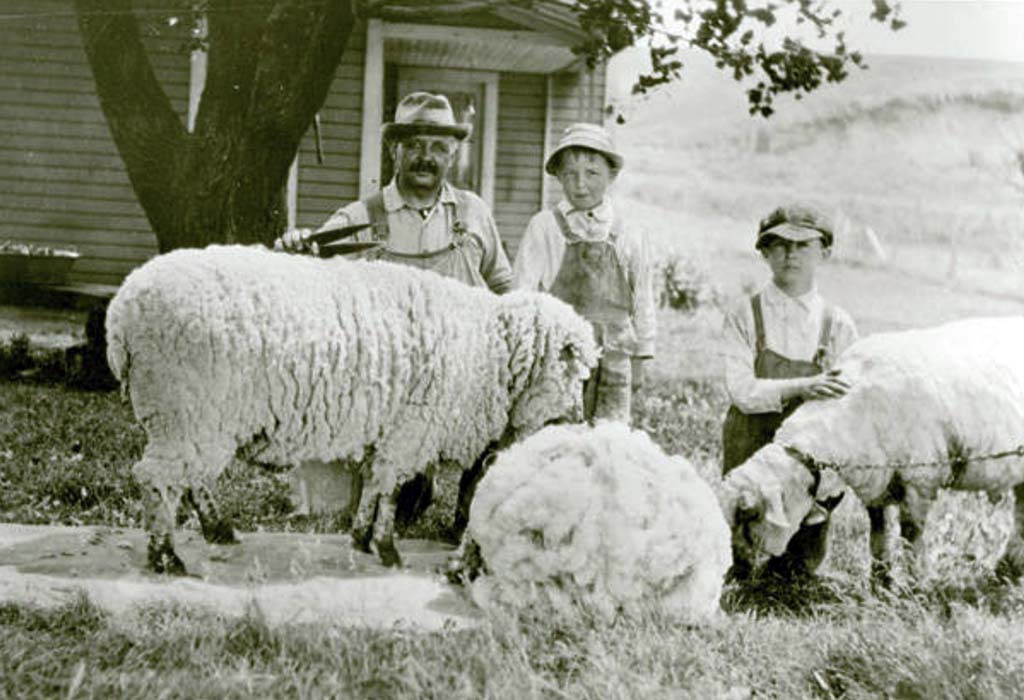
The sheep had to be brought in before dark.
That job might fall to one of the children. The flock had spent the day grazing in the hills, and now the sheep had to be gathered and brought back to a pen or shelter near the house. Along the way, they had to be kept out of the corn and garden. Roaming dogs were a threat to sheep, so there was good reason to get the flock in before dark.
A child might call the flock with “Co-sheep! Co-sheep!” or some variation. Once the animals started moving, the job was to keep them together and headed home.
Children helped in other ways, too. An orphan lamb might need to be fed by hand. After shearing, they could help pick a fleece clean before it was carded. Raw wool was greasy with lanolin and caught burrs, twigs, dirt and manure. Picking through it was close work, done by hand.
These weren’t chores invented merely to keep children occupied. Sheep represented food, wool and income, and children were trusted with part of their care.
And there were once a great many sheep to care for.
In 1930, Grayson County, Virginia, reported 31,768 sheep and lambs. Across the Blue Ridge into North Carolina, thousands more grazed mountain farms.
Today, seeing a flock along a mountain road may catch your attention. A century ago, it would have been far less remarkable. Appalachian sheep farming was a substantial part of life in these mountains, and some of its everyday responsibilities rested in surprisingly young hands.

Why Sheep Belonged in the Appalachian Mountains
There were good reasons for all those sheep.
Sheep could graze rocky slopes and rough pasture that a farmer couldn’t put into corn or wheat. That left the better ground for crops and hay. They also needed less winter feed than cattle, an important consideration when good hay ground competed with land needed for crops.
For a small farm, even a modest flock could earn its keep. Five or ten sheep could provide wool for clothing and bedding, along with lamb or mutton for the table or sale. Unlike an animal raised solely for meat, a sheep produced another fleece the following year.
Not every flock was small. By the late nineteenth and early twentieth centuries, some Grayson County farmers kept 50 to 200 sheep or more. Small household flocks existed alongside these larger operations.
It would be easy to credit all this to the region’s Scots-Irish heritage. Settlers from Scotland and Ulster certainly brought traditions of sheep raising with them, but they didn’t have a monopoly on the practice. English, German and Welsh settlers kept sheep as well. In the Southern Appalachians, the land and the needs of a farm family probably mattered as much as ancestry.
A flock needed attention, but not every job required an adult. Some could be trusted to the family’s sons and daughters.

Work a Child Could Be Trusted With
Children didn’t all do the same work. Age and strength mattered.
A younger child could watch the edge of a corn patch or help manage the flock. Wool offered work that required patience more than muscle. Children could help with a fleece before it was washed or carded. Older boys could take on the rougher work of catching and holding sheep for the shearer.
Lambing brought different responsibilities. When a ewe died or rejected her lamb, someone had to keep the newborn fed. Children sometimes took on that responsibility. A lamb raised by hand could become unusually tame.
The work could also require judgment. A child keeping sheep away from a garden or cornfield had to notice where the animals were going and head them off. Caring for an orphan lamb meant returning to it for another feeding. These weren’t chores a child could do without paying attention.
Children contributed according to what they were capable of doing. Younger children could help with wool. Older, stronger children could handle animals. As their abilities grew, so could the responsibilities entrusted to them.
The work mattered to the household. A child who kept sheep out of the corn protected a crop. Feeding an orphan lamb might save an animal. Preparing a fleece moved the wool one step closer to use or sale.
And once the fleece came off the sheep, another chain of work was just beginning.

From Fleece to Finished Wool
Shearing left a family with a fleece, not a finished product.
Fresh wool carried the grease, dirt and debris it had accumulated on the sheep. Once the fleece had been cleaned and prepared, some of the work could leave the farm.
In Ashe County, David Worth operated a carding machine on Three Top Creek. Families could bring cleaned wool to a mill like his, where machinery combed and aligned the tangled fibers into soft rolls ready for spinning. Payment might be made in cash or by leaving the miller a portion of the wool.
Carding at a mill saved hours of doing the job by hand. The wool could then return home ready for spinning, much as corn taken to a gristmill returned as meal. The machine took over one time-consuming step without taking wool work out of the household.
Shearing could bring neighbors into the work, especially when a farmer had a larger flock. There were sheep to catch and hold and fleeces to gather while the shearer kept his blades moving. On a small farm, the family might manage by themselves or bring in someone who knew how to shear. With more sheep, more hands made the work go faster.
For generations, that system made sense. Then the economics of keeping sheep began to change.

Why the Sheep Began to Disappear
Sheep still suited the mountains. What changed was the cost and trouble of keeping them.
Dogs were one problem. Roaming dogs could attack a flock at night and kill or injure several animals before a farmer could stop them. The losses became serious enough that Virginia and North Carolina used dog taxes to help compensate sheep owners.
Dogs weren’t the only problem. Stomach worms became harder to control when sheep were confined to fenced pastures, and effective treatments were still limited.
The wool market was changing, too. After World War II, nylon and acrylic competed with wool, and imported wool increased the competition. A fleece that had once been a dependable part of a farm’s yearly return became less valuable.
At the same time, beef cattle became a better choice for many mountain farmers. Cattle didn’t require the same daily protection from dogs, and farmers didn’t have to shear them or prepare a yearly fleece for market. Increasingly, cattle occupied pastures where sheep had once grazed.
The change shows up in the numbers. Grayson County still had 31,768 sheep and lambs in 1930. By 1950, the number had fallen to about 12,000. Ashe and Alleghany counties in North Carolina experienced steep declines as well.
No single change drove the sheep from the mountains. Together, the disadvantages began to outweigh the reasons for keeping them.
As the flocks dwindled, something else was disappearing from mountain farms: the work children had once done alongside them.

When a Childhood Job Disappeared
The sheep didn’t disappear completely. They can still be seen grazing on farms in the Blue Ridge today. What disappeared was the time when keeping sheep was an ordinary part of mountain farm life.
And with that went work that generations of mountain children had known.
None of those jobs was remarkable at the time. They were simply part of growing up in a household where everyone who was able had something useful to do.
What is harder to see today is the ordinary life that once surrounded all those sheep: families tending their flocks, neighbors helping at shearing time, wool going to a local carding mill, and children taking on responsibilities that helped keep the farm going.
Today, a flock beside a mountain road is something we may slow down to notice.
A century ago, a child might have been waiting for those sheep to come home.
More Appalachian History & Culture
Find more stories from the region’s past on the History and Culture page.
Appalachian History and Culture Collection
Enjoying Blue Ridge Tales? I hope so. If you’d like to help keep the site ad-free and the stories rolling, you can buy me a coffee.
To stay connected, subscribe to my Blue Ridge Tales newsletter, and have stories and updates delivered once a month to your inbox.


