Appalachian Hog: Too Smart to Fence
An installment in our Appalachian Foodways series
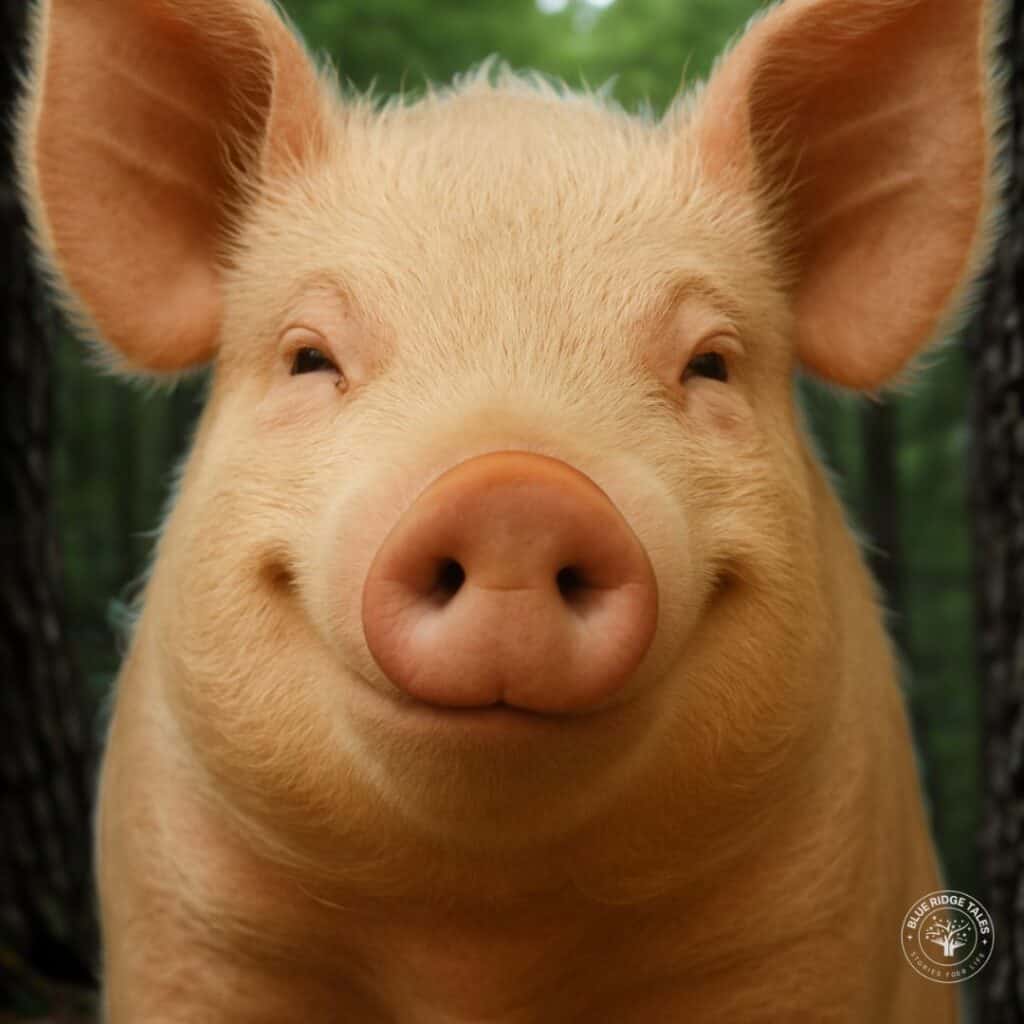
Daybreak is quiet and subdued. A lingering chill hangs in the air, and the rustling of leaves hints at something unseen nearby. An Appalachian hog steps out from a stand of young poplar, nose to the ground, as comfortable in the woods as any wild creature. It pauses at the edge of an old fence line, considers the opening, and slips through without much effort. That small act explains why the animal became so much a part of life in the mountains. A hog that knew how to work the land could keep itself fed and give a family what it needed when cold weather came.
Hogs grew strong in the woods and learned where the good forage lay. Families took notice. A hog that stayed healthy on its own saved time and worry, and any animal that returned home heavy at the end of the season held real value. They made beds wherever it suited them. Some scraped shallow nests on the farm when the slop bucket stayed full. Others rested under laurel or buried themselves in leaf beds deep in the woods. They drifted between both places and came home when food grew scarce or the weather turned.
How the Appalachian Hog Reached the Hills
Hogs arrived in the American South through early Spanish expeditions. They moved north and inland as English, Scots-Irish, and German families settled the frontier. By the time those settlers climbed into the Blue Ridge and the Alleghenies, they carried with them animals that could survive without feed expense.
These hogs adapted fast. They ate what the mountains offered and thrived in the mixed forests that covered the slopes. Settlers found that a hog raised on acorns, hickory mast, roots, and fallen fruit grew fat. A creature that could manage its own forage fit well with a mountain farmer’s subsistence lifestyle. Mountain farming demanded time, and a hog that worked the woods alone eased that burden.
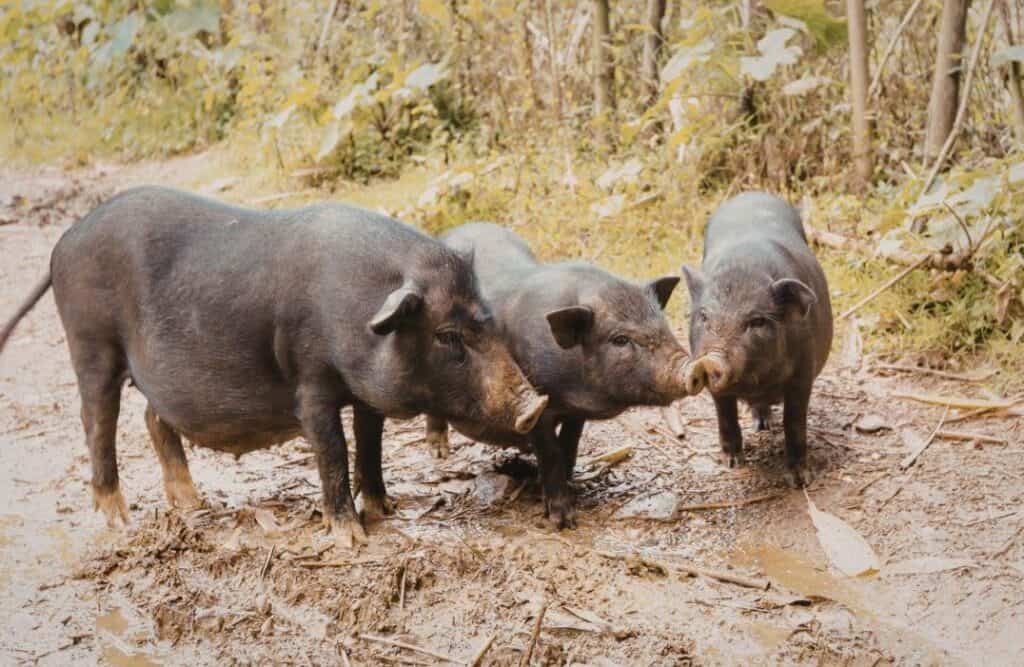
A Landscape Built for an Appalachian Hog
The land itself shaped the animal’s story. Appalachia has steep ridges, narrow valleys, and miles of hardwood forest. Building fences across such ground challenged even the most determined farmer. Many settled for rails or woven branches, only to find that a young hog could nose beneath or squeeze through. It took a good eye to keep track of them, and sometimes a sharper ear.
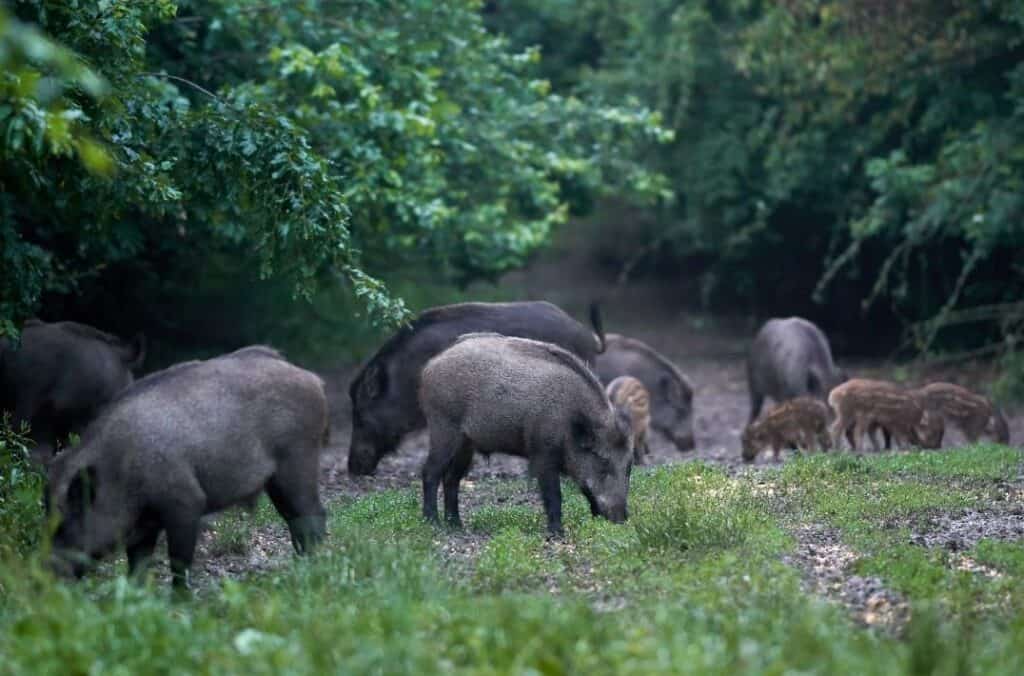
Appalachian Hog in the Open Woods
Letting hogs roam became common practice. Many counties treated the woods as open range. Families marked their animals by cutting a small pattern into an ear. These marks helped resolve disputes when animals wandered into a neighbor’s garden or rooted along a road.
Appalachian hogs lived their own lives once they left the pen. Some stayed within a short walk of the home place. Others traveled far. They chose cool hollows in summer and moved along south-facing slopes in winter. Court records mention disagreements when hogs pushed into corn or potatoes. Yet the open-range system continued because the animals returned fat and healthy and because families needed every advantage they could find.
As fall approached, food grew scarce in the woods. The animals felt the change and drifted back toward familiar yards and sheds. That return marked the start of the most important farm work of the year.
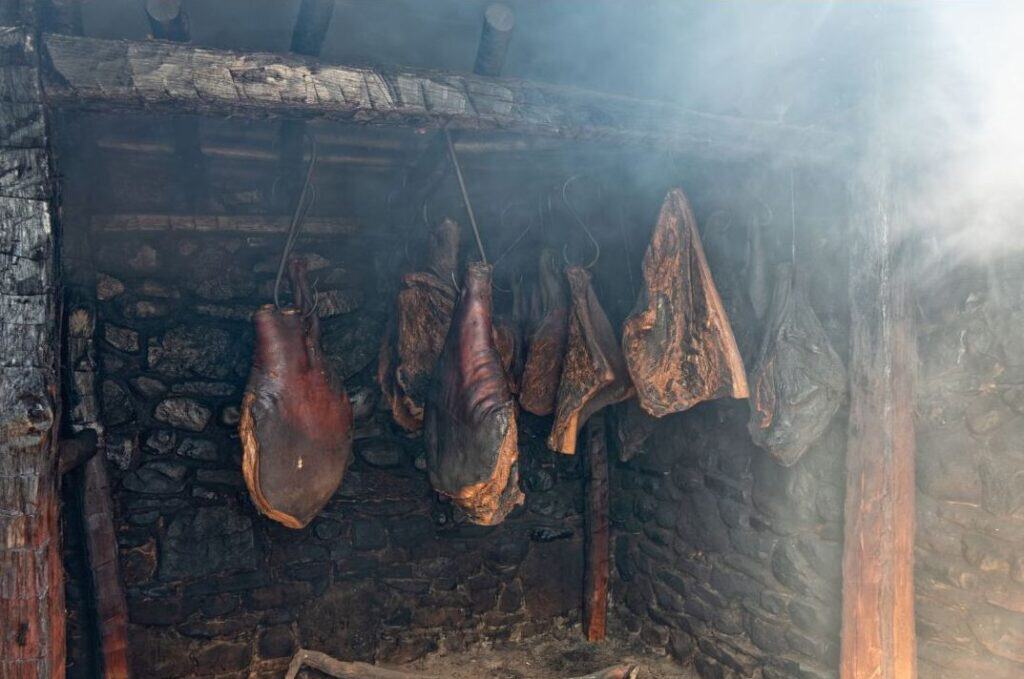
Hog Killing Time
Late-fall hog killings were part of the rhythm of mountain life. The weather cooled enough to keep meat safe, and families used the moment to prepare for winter. The work took time. Water had to be heated for hide scraping and tool sharpening. Children hovered close, watching older hands move through practiced steps.
Hogs raised on woodland forage gave meat that stored well. Salted shoulders and hams filled smokehouses. Ribs, tenderloin, and sausage fed families through the cold months. Lard became a kitchen staple and a household necessity. Nothing from the hog went to waste. Mountain families used “everything but the oink.” Each cut found a place in the cellar or the pantry, and every jar or sack meant one more night with a hot meal on the table.
The hog had spent its year running free. It now met its purpose. A single animal could carry a family through winter.
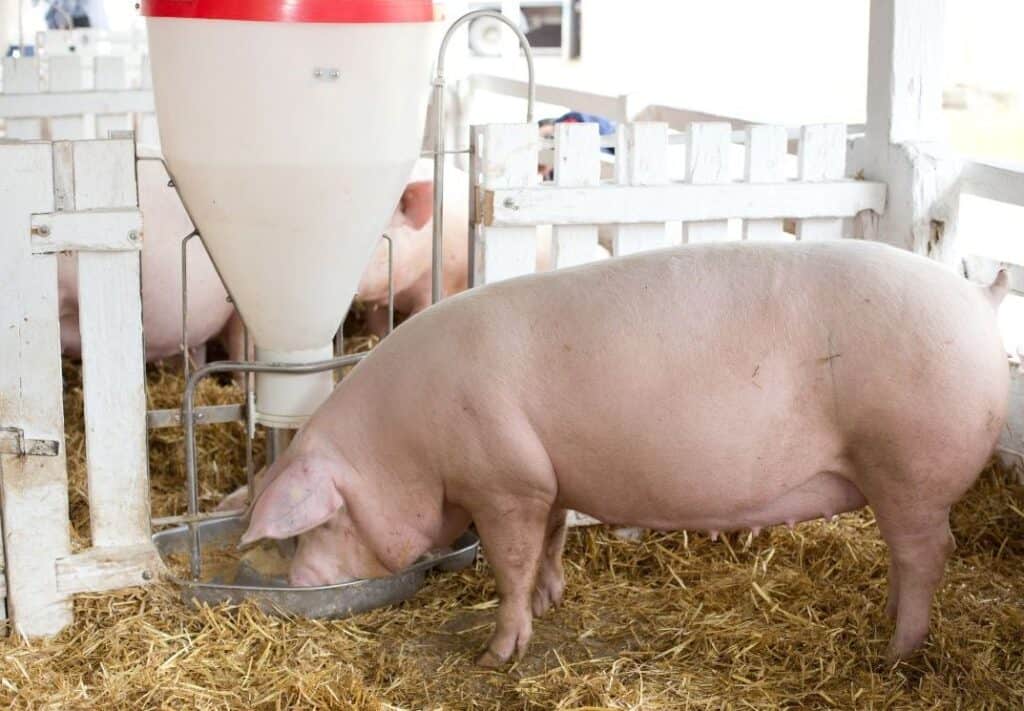
The Mountain Finally Caught Up with the Hog
The world changed in the early twentieth century. Open-range laws shifted county by county. More farmers wanted their crops protected. Communities moved toward fenced livestock rather than free-roaming animals. Hogs that once ranged across ridges now stayed closer to home.
The land changed, too. The chestnut blight reshaped the forests and removed a major source of fall nutrition. Chestnut trees had covered much of the Appalachian range, and their nuts provided a dependable, energy-rich food source. When the blight wiped out the trees, hogs lost a reliable seasonal food. Families adjusted. They grew more feed, built stronger pens, and moved away from the old open-range system. The hog remained a fixture in many hollows, but the way people raised it shifted.
What Survives of the Old Hog Culture
Some elements of the old tradition stay alive today. Small farms still raise hogs with care. Local fairs celebrate regional foodways. On certain back roads, you may still see a yard with a smokehouse built by someone who remembered the old routine. Most families no longer depend on the hog for winter survival, yet many still speak of hog killing time with respect. The memory carries weight because it marked the turning of the year.
Stories travel faster than animals, and the story of the Appalachian hog remains part of the region’s identity. The animal shaped diets, family work, and the way communities organized their seasons. A hog raised in the woods had a mind of its own, and that stubborn streak suited the mountains well.
When people talk about the old days, they often describe the hog as if it lived by choice rather than routine. It followed trails, learned shortcuts, and found openings in fences that seemed secure the day before. Even now, with sturdy pens and better feed, the tales linger. A hog may no longer roam far, yet the idea of an animal too smart to contain stays with those who remember how the mountains once worked.
The land made room for the hog, and the hog returned the favor by keeping families fed. That shared history endures. It lives in smokehouse memories, in family recipes, and in tales told on quiet evenings. The hog knew the woods, and the woods shaped the people who raised it. A creature that found its own path through the hills left a mark that will last for generations.
Sidebar: How a Hog Turns Wild
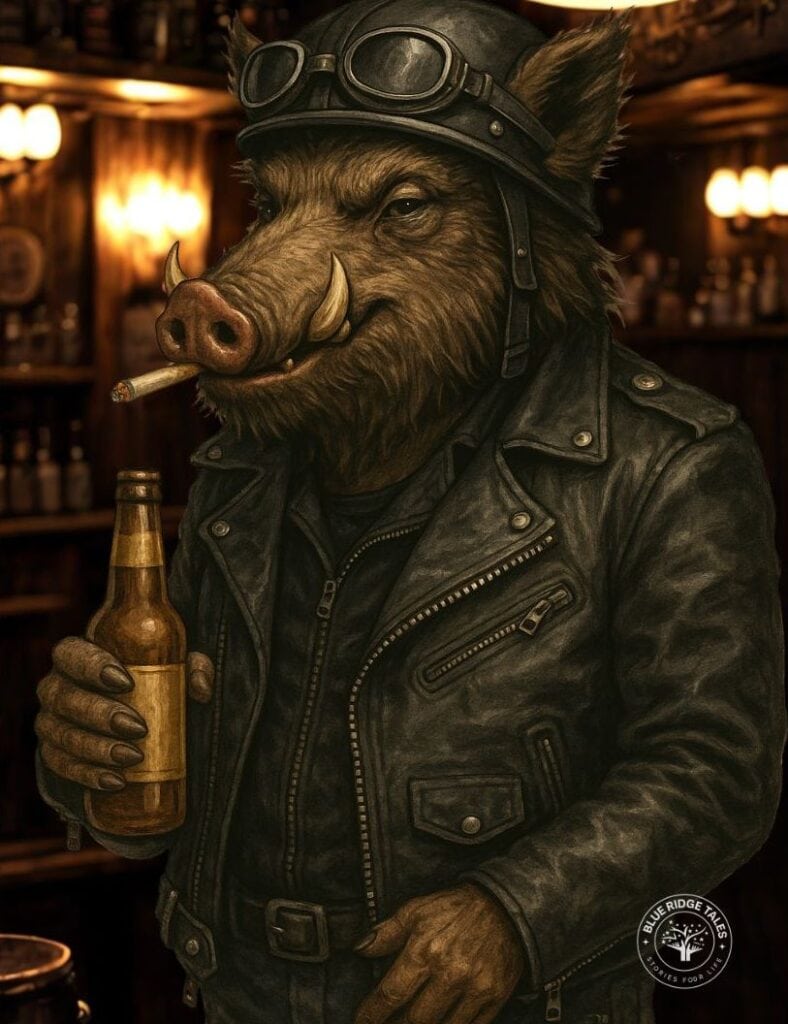
A hog carries its wilder traits from birth. When it leaves the pen and learns to live on the land, those traits rise to the surface. Tusks grow longer because nothing trims them. Roots and hard mast sharpen the points. Snouts lengthen as the animal works the ground for food. Coats grow coarse once the hog trades shelter for brush and thicket.
None of this creates a new species. A feral hog and a European wild boar belong to the same family. What people call a “boar” in the mountains is often a farm hog that figured out how to live on its own. A few pockets include descendants of wild boars released in the early twentieth century, but most still carry the look of their domestic past. The woods shaped them. Time did the rest.
More Foodways Stories
Explore the dishes, tools, and kitchen traditions that shaped mountain life on the Foodways page.
Appalachian Foodways Collection
Enjoying Blue Ridge Tales? I hope so. If you’d like to help keep the site ad-free and the stories rolling, you can buy me a coffee.
To stay connected, subscribe to my Blue Ridge Tales newsletter, and have stories and updates delivered once a month to your inbox.