Baldwin-Felts Detective Agency and the Limits of the Law
An installment in our Appalachian History and Culture series.
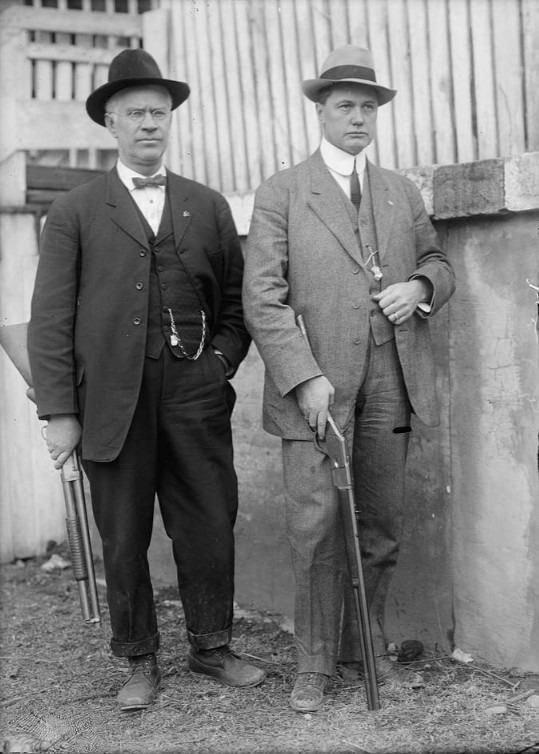
The sheriff knew where the trouble was coming from before anyone notified him. Raised voices carried down a company road cut into the hillside. A family was loading what they could onto a wagon. A company foreman stood to the side, arms folded, eyeing them closely. Two armed men waited nearby, calm and unhurried.
The sheriff rode out anyway.
He had the badge. He had authority. What he didn’t have was jurisdiction. The houses belonged to the mine. The road crossed company land. The men doing the watching stayed careful, never quite crossing a line that could be named in court. The sheriff could tell folks to settle down. He could stand there and watch. What he couldn’t do was stop what was already underway.
That gap between what the law could see and what it could touch was real in the Appalachian coalfields. It helps explain why the Baldwin-Felts Detective Agency kept showing up wherever labor trouble followed industry. Not because local lawmen were weak, but because the law itself had edges.
When Authority Stopped at the County Line
Law enforcement in early twentieth-century Appalachia was local by design. Sheriffs were elected. Deputies were few. Authority ended at county lines and bent around private property. That system worked for neighborhood disputes and courthouse business. It wasn’t built for companies that owned towns outright and operated across multiple counties.
Coal companies owned the land, the houses, the stores, and often the roads. When conflict came, it unfolded on property the company claimed as private. A sheriff could keep the peace in town, but once trouble crossed onto company land, his reach narrowed fast.
This wasn’t a failure of will. It was structural. The law moved slowly, answered to voters, and stayed inside its boundaries. Industry didn’t.
Once coal operators understood those limits, they sought enforcement that could move where sheriffs couldn’t.
Baldwin-Felts Enters the Jurisdiction Gap
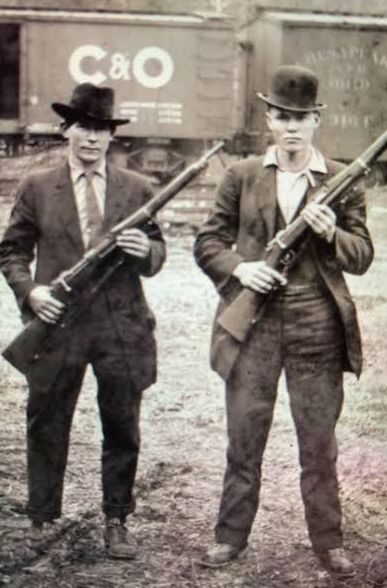
The Baldwin-Felts Detective Agency began in the 1890s, protecting railroads and company property. By the early 1900s, they were a familiar presence in Appalachian coalfields.
What Baldwin-Felts offered was straightforward. Their agents crossed county lines. They worked under contract, not election. They answered to the employer who paid them. When needed, they were deputized by local sheriffs who lacked manpower and time.
On paper, that deputization looked like cooperation. On the ground, it shifted the balance of power. The badge might say deputy, but the orders came from the company office.
Baldwin-Felts handled evictions, guarded company property, gathered intelligence, and tracked organizers. Over time, their work in Appalachia centered less on detective work and more on labor control. They didn’t replace the law. They operated in the space where the law stopped short.
This is where the idea of contract marshals fits. Not as a title, but as a function. Private enforcement doing public-looking work, funded by private contracts, moving freely across jurisdictional lines.
Baldwin-Felts and the Limits of the Law in Practice
Once coal companies relied on Baldwin-Felts, conflict changed shape.
Local law enforcement carried built-in restraints. A sheriff had to think about neighbors, voters, and tomorrow’s election. A private agency didn’t. Baldwin-Felts could act quickly, reinforce its presence, and leave the political fallout behind.
That difference mattered when disputes tightened.
In 1912, miners along Paint Creek and Cabin Creek walked out after years of pressure. At first, the strike followed familiar lines. Then coal operators brought in hundreds of Baldwin-Felts guards.
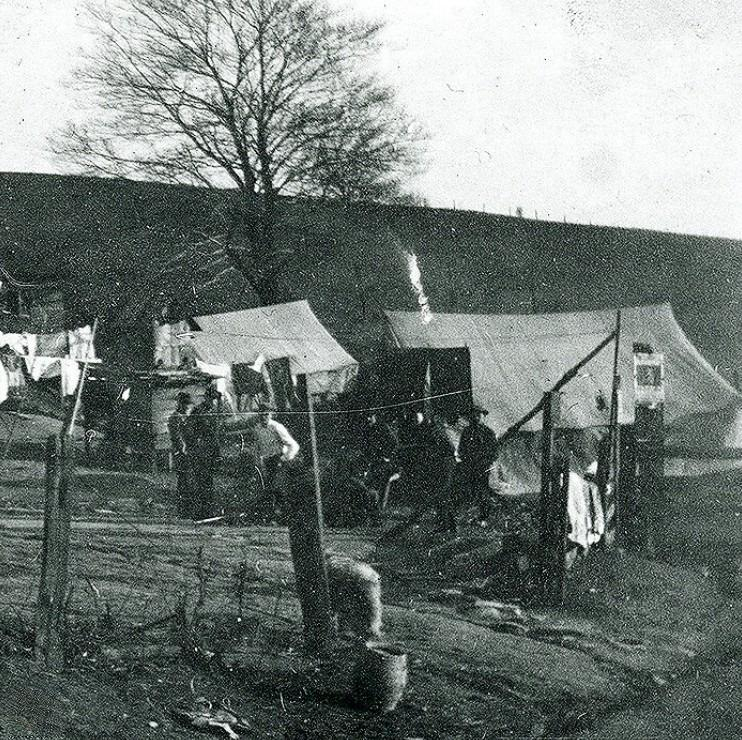
Families were forced from company housing. Property was destroyed. Armed guards controlled access to camps and roads. Operators built fortified positions with machine guns. What began as a labor dispute hardened into a standoff.
This is where the limits of the law stop being abstract. Local authority couldn’t contain what was happening. The state imposed martial law, not because order vanished, but because private enforcement had escalated the situation beyond local control.
The Paint Creek–Cabin Creek strike didn’t erupt out of nowhere. It followed a pattern already set.
How Private Enforcement Raised the Stakes
For miners and their families, the arrival of Baldwin-Felts changed daily life. Authority no longer felt local. The men enforcing company rules weren’t neighbors or elected officials. They were hired agents with contracts and rifles.
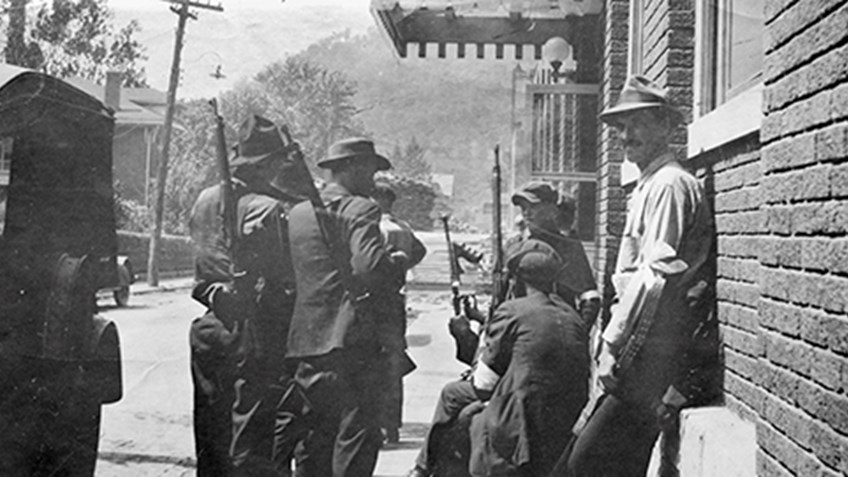
That shift counted. When enforcement answers to capital rather than community, every dispute carries more weight. A complaint becomes a challenge to the system that hired the enforcers.
This helps explain why violence became more likely.
Once one side could act with speed and impunity across county lines, the other adapted. Organizing grew urgent. Resistance grew coordinated. What might have remained a contained dispute became a confrontation.
The sensational versions focus on gunfire. The quieter truth is harder to sit with. Baldwin-Felts didn’t create conflict solely through cruelty. They created conditions where conflict was easier to trigger and harder to cool down.
They were a practical answer to a structural problem.
Baldwin-Felts Beyond the Coalfields
The agency’s role wasn’t limited to labor disputes. Baldwin-Felts also appeared in high-profile criminal cases where local law faced similar limits.
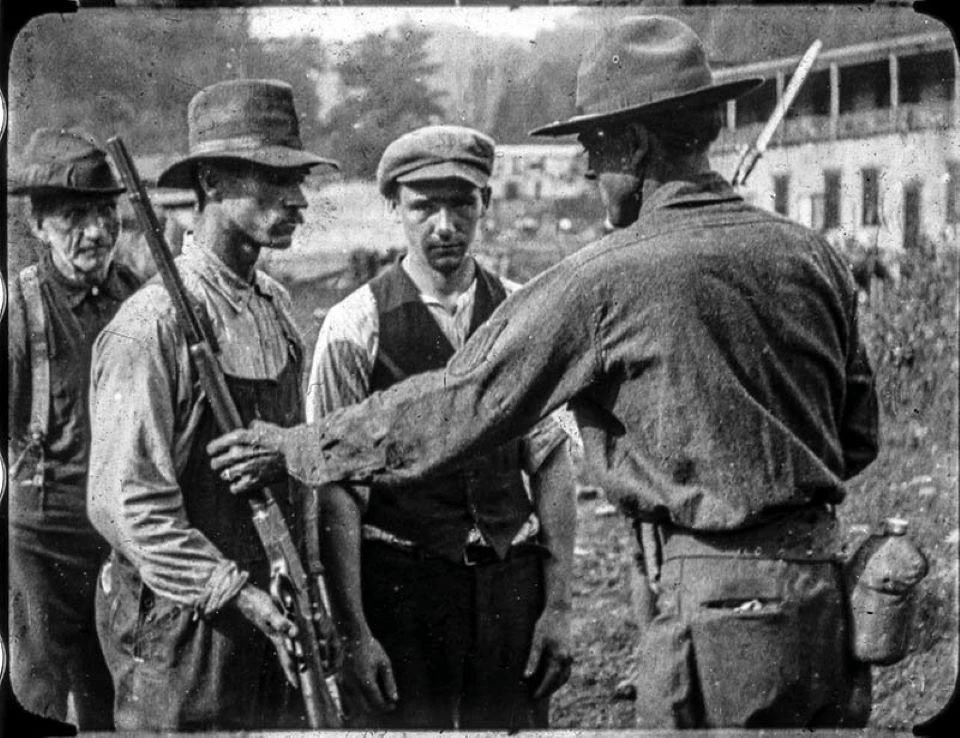
After the Hillsville courthouse shooting in 1912, the agency helped track down fugitives connected to the case. A widely circulated photograph of a Baldwin-Felts agent taking Floyd Allen into custody blurred the line between public authority and private enforcement for a national audience.
The details differ from a labor strike, but the underlying problem is the same. Local law confronted a situation that spilled beyond its reach. Baldwin-Felts stepped in where jurisdiction thinned out.
Once you see that pattern, the agency’s repeated appearance across Appalachian history stops looking coincidental.
From Baldwin-Felts to the Mine Wars
Understanding Baldwin-Felts clarifies what followed.
Paint Creek and Cabin Creek weren’t accidents. They grew from a system that combined industrial power, private enforcement, and legal limits that favored property over folks.
The Coal Creek War tells a related story from an earlier moment. There, miners confronted convict leasing, a system backed directly by the state. The conflict forced change, but it also revealed how closely labor, law, and enforcement were tied together.
Coal Creek didn’t feature Baldwin-Felts in the same way, but the tension was already there. When enforcement serves an economic system first, conflict follows.
Paint Creek shows what happens when that enforcement is privatized and professionalized. Coal Creek shows what happens when labor pushes back against a system backed by state authority.
Seen together, they’re not isolated explosions. They’re chapters of the same story.
The Law Had Limits, and Someone Filled Them
Go back to the sheriff on that company road.
He did his job as far as the law allowed. The problem was that the law had been drawn for a different world. A world of towns and farms, not company-owned valleys and industrial labor systems.
Baldwin-Felts didn’t exist outside the law. They existed because the law had edges, and coal operators were willing to pay to move beyond them.
Once that happened, disputes stopped being local. They became structural. And when pressure built, it didn’t release quietly.
That frame makes Paint Creek and Coal Creek intelligible. Not as chaos. Not as accidents. But as outcomes of a system that solved one problem by creating another.
More Appalachian History & Culture
Find more stories from the region’s past on the History and Culture page.
Appalachian History and Culture Collection
Enjoying Blue Ridge Tales? I hope so. If you’d like to help keep the site ad-free and the stories rolling, you can buy me a coffee.
To stay connected, subscribe to my Blue Ridge Tales newsletter, and have stories and updates delivered once a month to your inbox.