
New River: Why It Flows the Wrong Way
An installment in our Blue Ridge Travel series
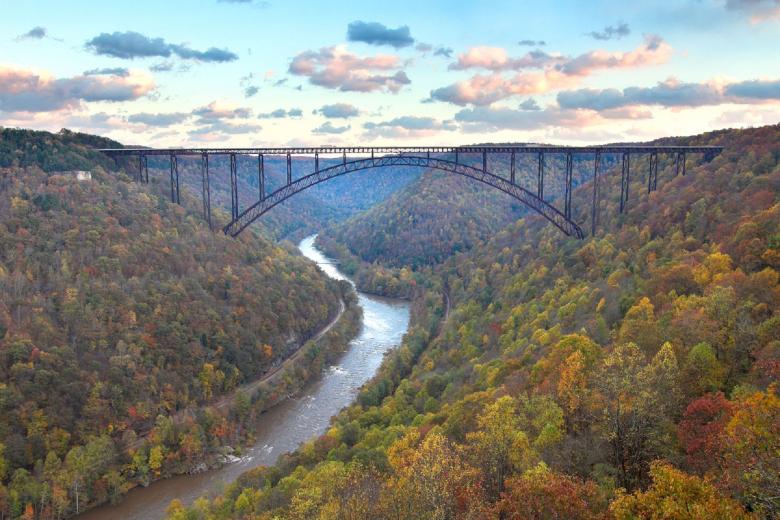
A gravel pull-off. A short path through weeds. The sound of water before you see it.
Below the bridge, the New River slides past in a wide, steady sheet. A kayak drifts through the current. Someone beside you says, almost casually, that this is the river that runs backward.
You look upstream. You look down.
“Rivers don’t do that.”
The water keeps moving.
What People Mean by “Backward”
The New River flows north.
It begins in the mountains of North Carolina. From there it moves into Virginia and then into West Virginia. Most rivers in the eastern United States trend south or southeast toward the Atlantic. This one heads the other way.
On a map, it looks wrong.
Water from the Blue Ridge usually makes its way toward the Chesapeake Bay. The New River doesn’t. It slips north through the Appalachians and drains inland into the Mississippi watershed.
Backward isn’t about gravity. It’s about expectation.
Where Does the New River End?
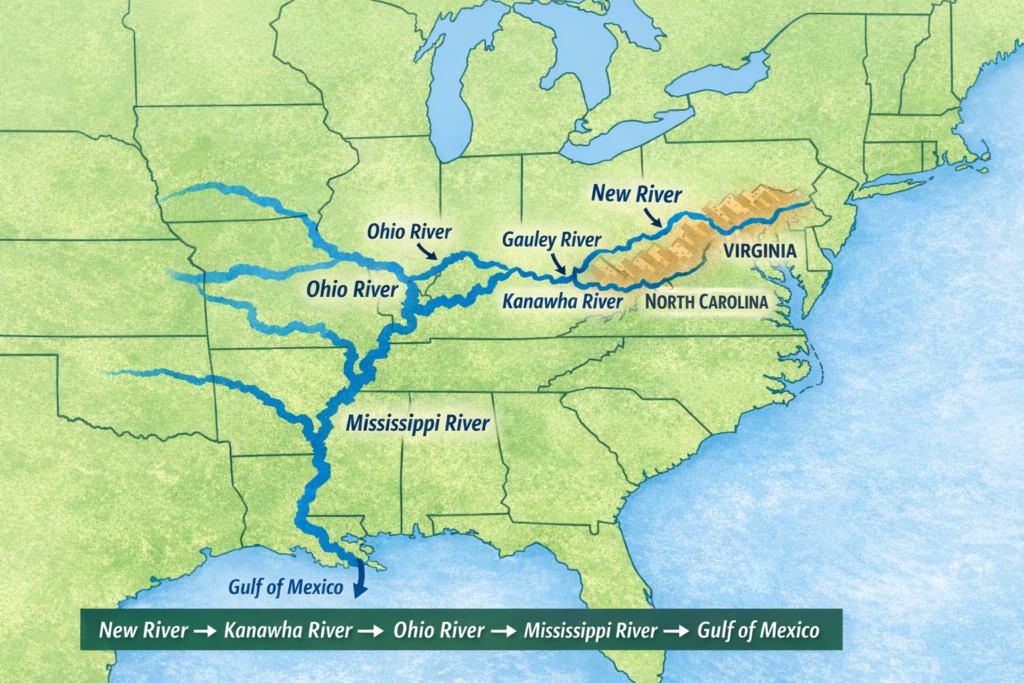
The New River doesn’t empty into the Atlantic.
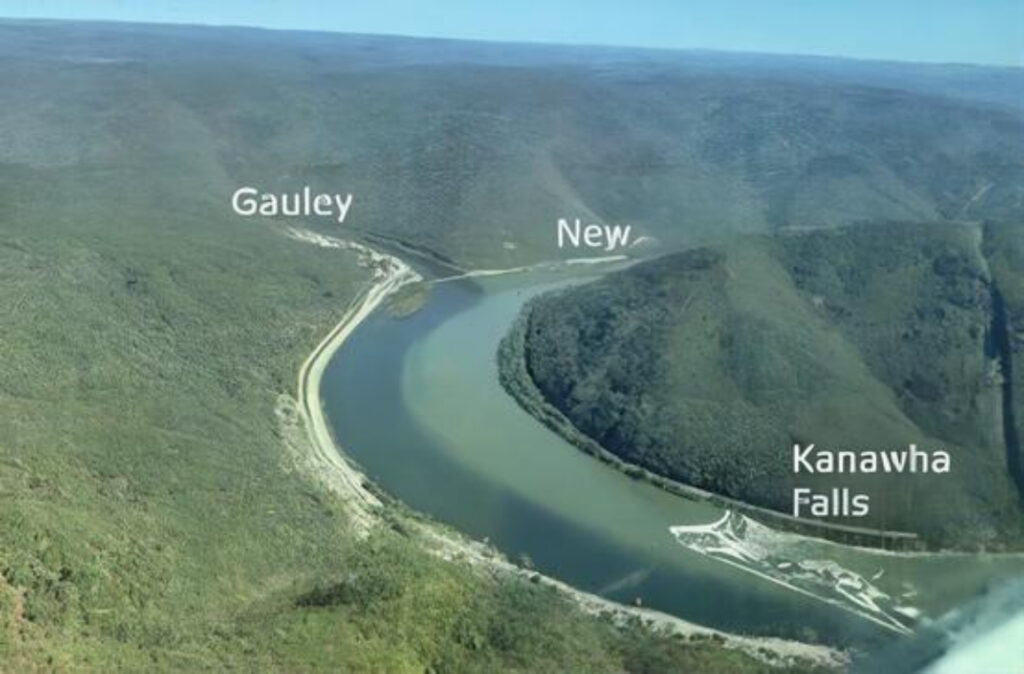
It flows north from North Carolina through Virginia and into West Virginia. Near Gauley Bridge, it joins the Gauley River to form the Kanawha River. The Kanawha flows northwest into the Ohio River. The Ohio then feeds the Mississippi River, which carries the water to the Gulf of Mexico.
A drop of rain that falls into the New River in Southwest Virginia eventually travels more than a thousand miles before reaching saltwater.
The direction may feel unusual. The path is not.
Water follows slope. The New River simply drains inland.
Why the New River Flows North
The explanation begins with age.
Geologists consider the New River one of the oldest rivers in North America. It likely existed before the Appalachian Mountains reached their present height. When the land rose, the river didn’t turn away. It cut down.
The river was already there. When the mountains rose, it kept cutting.
Over long stretches of time, that persistence carved deep channels through resistant rock. Instead of flowing around ridges, the New River slices through them. That’s why it forms narrow valleys and steep gorges in parts of West Virginia.
Compass direction has nothing to do with it. Water follows slope. The slope just happens to run north at this point in the mountains.
What That Means on the Ground
Stand at an overlook above the river gorge in West Virginia and you see the result. The New River sits far below, boxed in by walls of stone. It doesn’t wander through a broad valley. It threads through rock that rose after it had already chosen its course.
Walk down to the bank near Fries or Ivanhoe and you feel the same story in a quieter way. The river moves with steady confidence, not twisting in search of an easier path. It already has one.
That northward flow also determines where the water ends up. Rain falling on slopes that drain into the New River doesn’t reach the Atlantic. It travels inland. It joins the Ohio. It becomes part of the Mississippi basin.
A drop of water here begins a journey across half a continent.
That isn’t dramatic. It’s structural. The landscape sends it that way.
The New River in Mountain Identity
Over time, “the river that runs backward” became shorthand. It shows up in brochures. Guides mention it to paddlers. Teachers point it out to students studying state geography.
It’s easy to remember. It feels like a small rebellion against the rules.
But the phrase also carries something quieter. The New River doesn’t behave the way visitors assume it should. The mountains often work the same way. They look simple from a distance. Up close, they follow their own logic.
Locals don’t usually say the river is defiant. They say it runs north. The backward line belongs more to conversation than to science. Still, it sticks. It gives the place character.
When you stand on the bank and watch the current slide past, you understand why the phrase survives.
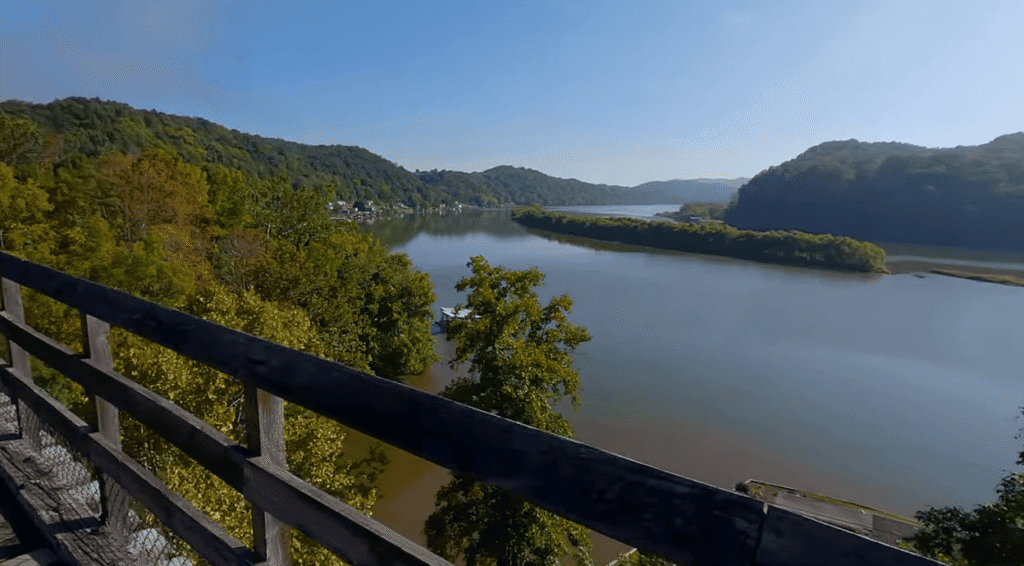
A Final Look at the Water
Back at the gravel pull-off, the kayak has moved on. The sound under the bridge remains steady.
The New River keeps sliding north. No announcement. No change of mind. Just motion along a path set long before roads and counties and state lines.
The river doesn’t run backward. It runs the way it always has.
We’re the ones who assume direction.
More Blue Ridge Travel
Find more travel stories, routes, and small-town stops on the Blue Ridge Travel page.
View the Blue Ridge Travel Collection here
Enjoying Blue Ridge Tales? I hope so. If you’d like to help keep the site ad-free and the stories rolling, you can buy me a coffee.
To stay connected, subscribe to my Blue Ridge Tales newsletter, and have stories and updates delivered once a month to your inbox.