Rocky Knob Recreation Area: Where the Parkway Slows
An installment in our Blue Ridge Travel series.
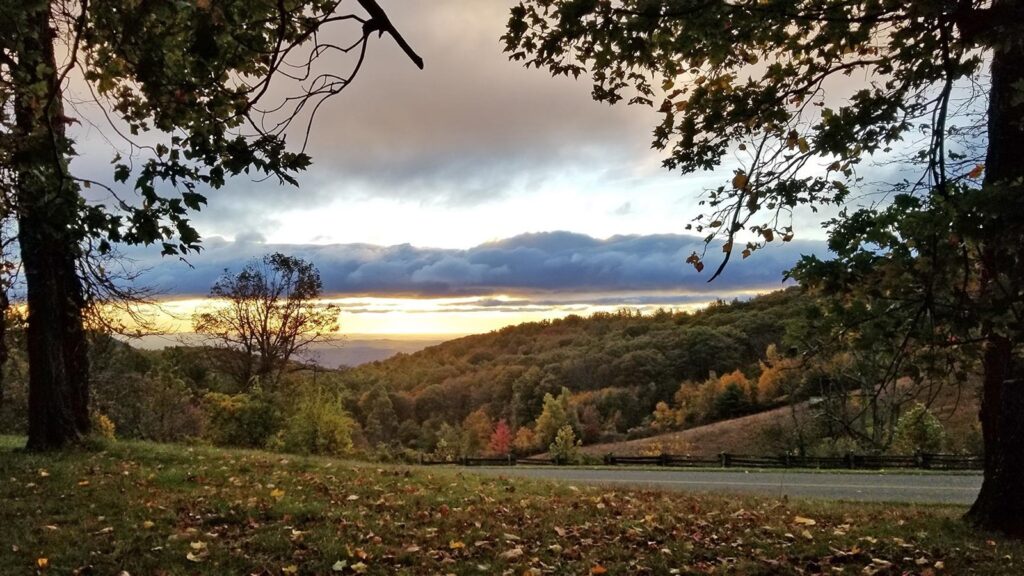
You’re driving the Blue Ridge Parkway, following its steady curves along the ridgeline. The road rises and falls, opening long views to either side. The rhythm is continuous. You move with it.
Then the brown sign appears: Rocky Knob Recreation Area.
Turn signal. Tires leave the main lane. Speed drops almost without thought. The hum of the Parkway fades as trees close in and the entrance road bends away from the ridge.
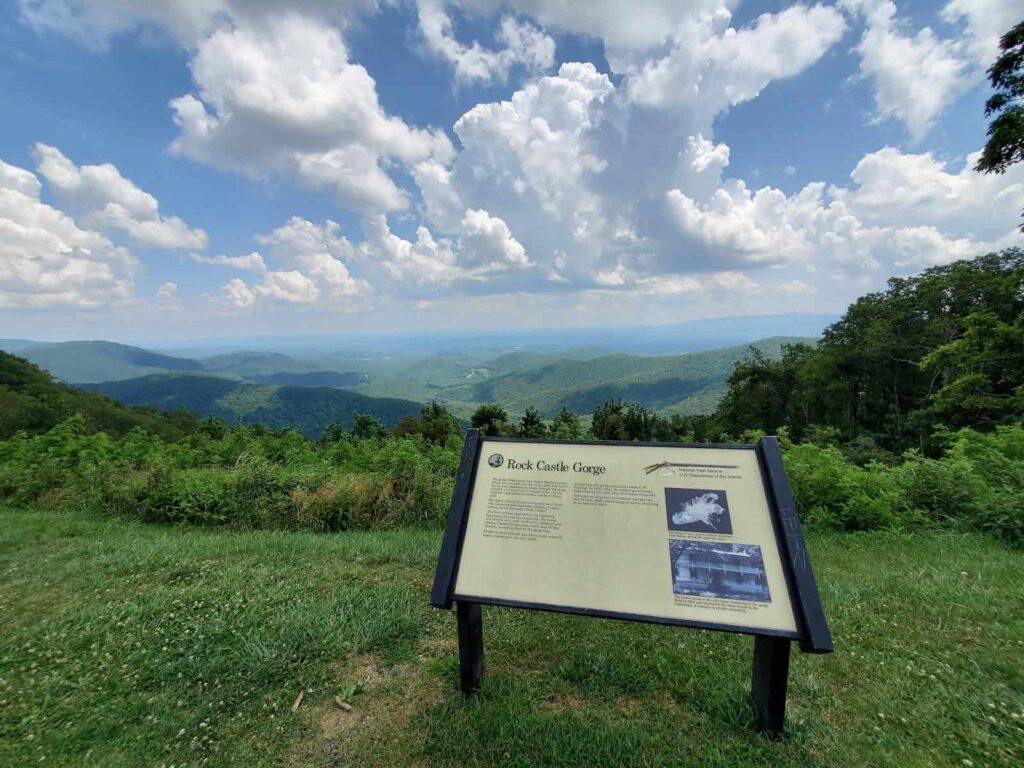
Driving south, the campground sits up the hill to your right, hidden behind trees where the road curves out of sight. You don’t see it from the Parkway. A short distance farther on, the visitor center comes into view. Across the road, on the east side, the Rock Castle Gorge Overlook opens along a low stone wall.
Beyond the trees near the campground meadow, a small deer herd grazes in the grass. A car door closes somewhere up the slope. Heads lift. They don’t scatter. Someone steps into the quiet and stands for a moment before moving on.
The Parkway keeps you moving.
Rocky Knob asks you to stop.
Rocky Knob Recreation Area occupies a deliberate position near milepost 167. The Parkway traces the spine of the ridge here while the land drops sharply into Rock Castle Gorge. The overlook, trailhead, campground, and visitor center are gathered into one deliberate arrangement.
This isn’t a scenic accident. It’s a hinge point.
Why Rocky Knob Recreation Area Sits Here
The Blue Ridge Parkway was planned as more than a corridor for automobiles. Its curves, overlooks, and recreation nodes were placed to shape how motorists encounter the mountains.
Rocky Knob Recreation Area marks one of those nodes. The ridge offers distance. The gorge below offers depth. Rocky Knob connects the two without forcing a choice.
From the overlook, the land unfolds outward in long layers. From the trail, it folds inward beneath the canopy. The shift is immediate. Remain at the rim. Descend into the interior. Settle in to camp.
The terrain already held that contrast. The Parkway formalized it and made it accessible within steps.
A Place to Stay, Not Just Look
Many overlooks along the Parkway function as brief interruptions. A car pulls in. A view is taken in. The road resumes.
Rocky Knob Recreation Area moves at a different pace.
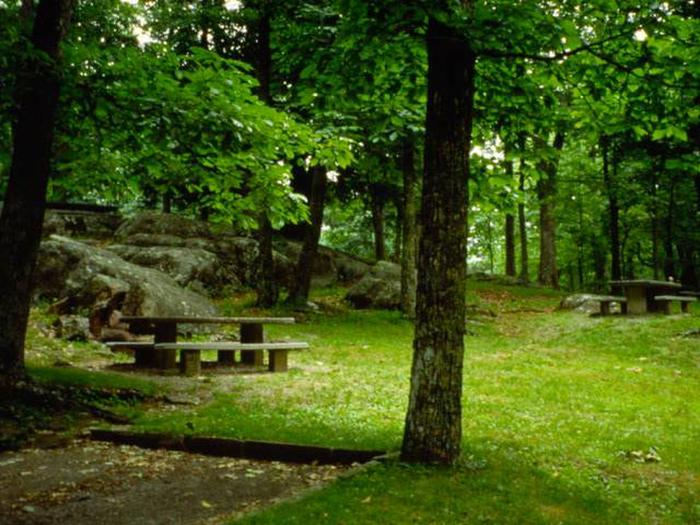
The campground loop pulls vehicles off the main corridor and slows circulation. Picnic tables sit in filtered shade. The visitor center provides orientation before any decision is made.
Duration is embedded in the layout.
The Rock Castle Gorge Trail reinforces that commitment. The descent requires effort. The return requires more. The experience can’t be reduced to a photograph taken from a stone wall.
It asks for time.
From Ridge to Interior: The Rock Castle Descent
The Rock Castle Gorge Trail begins near the overlook and drops steadily from the ridgeline. Within minutes, the horizon disappears behind hardwood trunks. Sound shifts. Wind thins. Light filters down rather than spreading outward.
That transition reveals the larger design.
The Parkway carries motorists horizontally along elevation. The gorge breaks that continuity and insists on vertical movement. Rocky Knob places that shift within easy reach of the road.
Ridge and interior coexist here in compressed form, allowing both experiences to unfold without dispersing them across miles of travel.
Edge Habitat and the Value of Stillness
The campground at Rocky Knob creates extended forest edges where open ground meets tree line. Those margins attract wildlife. Deer gather there, especially during quieter hours.
The meadow slopes gently away from the trees, giving animals room to graze while keeping cover close. Visitors notice them because movement has slowed. Engines are off. Footsteps measured.
Visibility here isn’t a product of remoteness. It comes from arrangement and pace. Open space meets shelter. Observation follows.
Elsewhere along the Parkway, similar edges pass unnoticed through a windshield. At Rocky Knob, the design allows time for detail to register.
The land isn’t wilder here than elsewhere. It’s simply more observable.
The Architecture Beneath the Surface
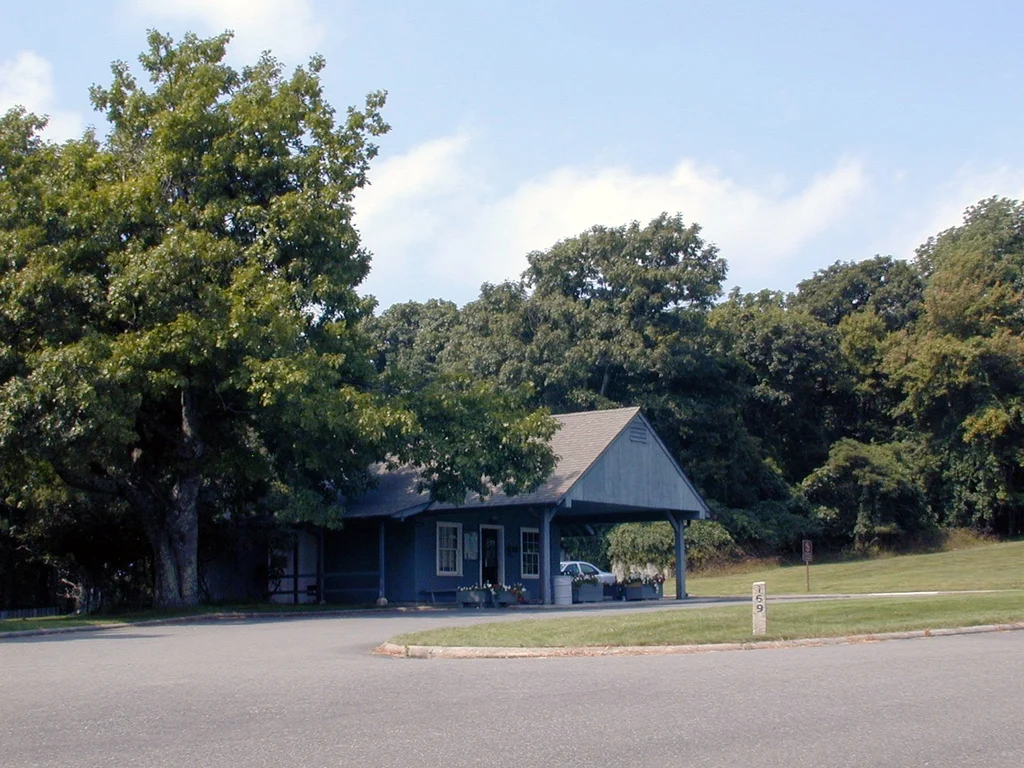
Rocky Knob Recreation Area appears understated. Stone tables sit low against the slope. The campground loop follows the terrain rather than cutting across it. Trails trace contours and natural drainage lines.
These choices reflect early Parkway standards that favored restraint and visual harmony with the land. Circulation patterns were organized to reduce speed and concentrate use without overwhelming the terrain.
The result is a constructed landscape that reads as unconstructed.
Entering the recreation area alters the rhythm of travel. Speed drops. Sound softens. From there, the experience branches. Remain at the overlook, settle into camp, or step down into the gorge.
The sequence feels natural because it was carefully arranged.
Stop. Stay. Breathe.
Rocky Knob Recreation Area doesn’t rely on spectacle. Its significance lies in structure.
Along a road built for forward motion, Rocky Knob creates a controlled interruption that invites stillness. It converts distance into depth without announcing the shift.
The transformation is quiet. Easy to miss.
Yet it reveals something essential about the Blue Ridge Parkway. The road was never meant to be experienced only through a windshield. Places like Rocky Knob were built to slow that rhythm and invite entry.
In that sense, Rocky Knob Recreation Area is more than a stop along the Parkway.
It is a deliberate pause built into the road itself.
More Blue Ridge Travel
Find more travel stories, routes, and small-town stops on the Blue Ridge Travel page.
View the Blue Ridge Travel Collection here
Enjoying Blue Ridge Tales? I hope so. If you’d like to help keep the site ad-free and the stories rolling, you can buy me a coffee.
To stay connected, subscribe to my Blue Ridge Tales newsletter, and have stories and updates delivered once a month to your inbox.