What an Appalachian Cabin Chimney Reveals About a Family
An installment in our Blue Ridge Travel series.
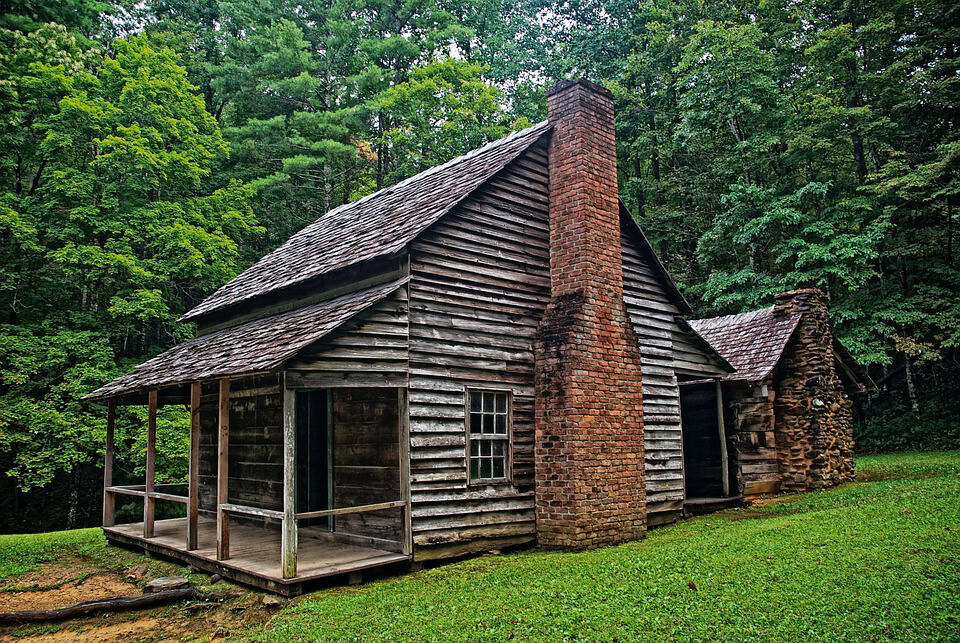
Travelers along the Blue Ridge Parkway pass old cabins without giving them much thought. The cabins stand close to the road with their porches weathered and their roofs settling a little. Most folks see them as scenery. Look long enough, though, and the details begin to talk. The chimney talks first. It is the clearest clue to how a family lived, worked, and hoped to stay. An Appalachian cabin chimney wasn’t just a stack of stone. It was a visible record of what the builder could manage at the time.
Cabins in these mountains were never built from a standard plan. Builders worked with what they had and shaped each home to match their skills and their needs. The chimney made those choices easy to read. Some were built fast to get someone through a hard season. Others took patience and money and pointed to a family ready to settle for good. Once you learn to read an Appalachian cabin chimney, the rest of the cabin falls into place.
Stick and Clay: Built When Money Was Scarce
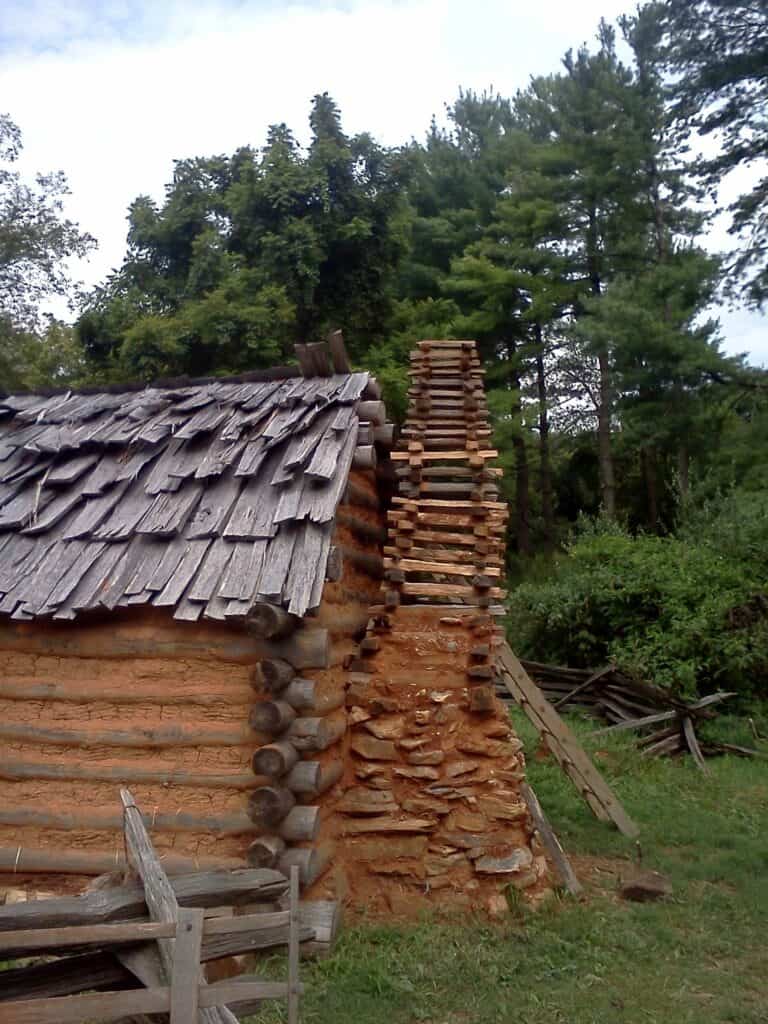
Some of the earliest chimneys in the mountains leaned toward improvisation. A family would weave sticks into a frame and cover the structure with clay. The method went by various names in different locales, but the idea stayed the same. It was quick, cheap, and risky. Fire didn’t forgive mistakes, and these chimneys rarely lasted more than a short spell.
Seeing one today tells you something clear. The builders were getting by with whatever the land gave them. They hoped to improve their footing later. The stick-and-clay form was a temporary solution for a family who intended to upgrade as soon as circumstances allowed.
Fieldstone: A Sign of Staying Put
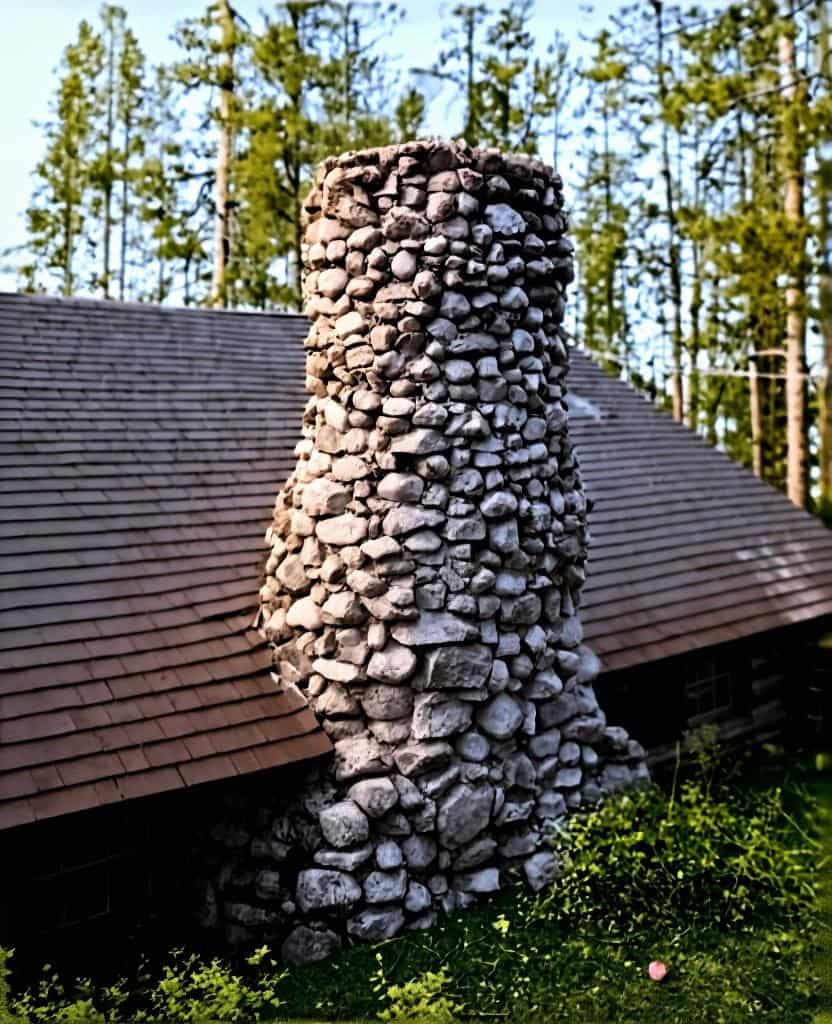
A fieldstone chimney sends a quieter but stronger message. Families gathered stones from their own ground and stacked them into a solid mass with simple mortar. None of the work came easily. Stones had to be shaped to fit, and the job carried on until the builder felt the stack would stand through storms and seasons.
This type of chimney tells you the family planned to stay. They used what the land offered but shaped it with care. The finished structure retained heat in the cabin and marked the home as one built to last. Many chimneys along the Parkway follow this pattern because they reflect labor rather than luxury.
Hewn Stone or Brick: Proof of Connections and Cash
A hewn stone or brick chimney adds another layer to the story. Quarried stone had to be shaped by someone with tools and training. Brick had to be purchased, traded for, or hauled a long way. These chimneys don’t shout wealth, but they do show a family with enough stability to reach outside their immediate surroundings.
The work took skill. A mason could shape stone into a snug fit that shed water and held its line for generations. Brick carried its own signals. Anyone who used it had some cash on hand or ties to a larger community. When you see a chimney like this, you’re looking at a home built with intention.
Logs and Craftsmanship
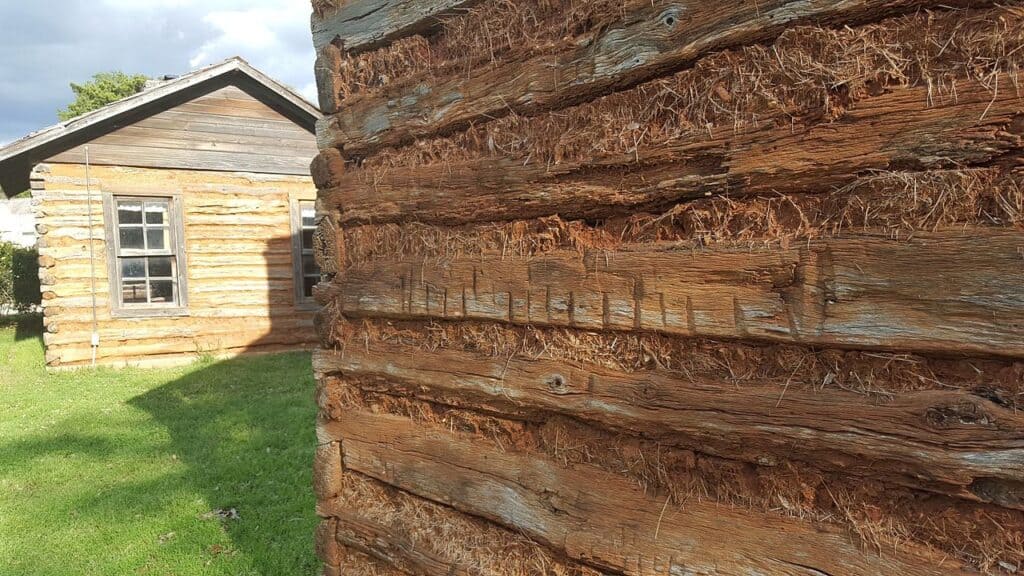
Once the chimney sets the tone, the walls deepen the story. Square-hewn logs didn’t appear by accident. They required time, a sharp broadaxe, and steady hands. A family that invested in this level of work planned to stay put. They built their Appalachian cabin as a long-term shelter rather than a stopgap.
Round logs, notched quickly, served families well enough. A builder could put up walls without shaping each piece. These cabins kept people warm but didn’t send the same message. The contrast between the two styles says a great deal about the kind of life underway inside.
How the Corners Tell on the Builder
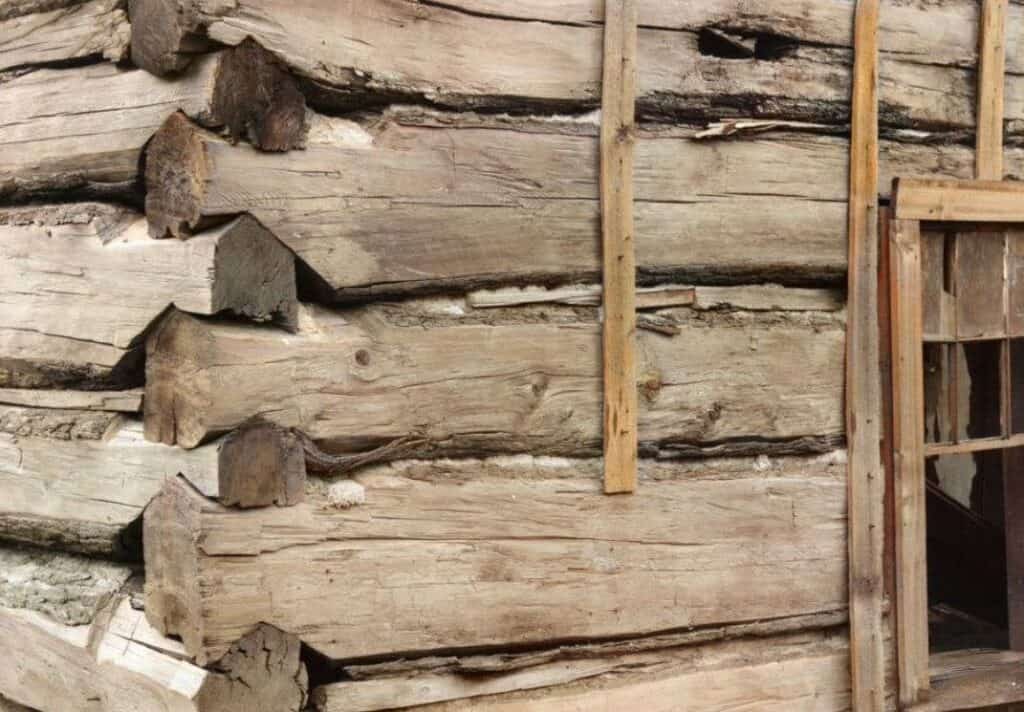
Corner joinery reveals more than most visitors expect. They point to a builder who knew the work and took pride in it. Simpler joints get the job done but loosen faster in the weather. They often show a home built quickly or with limited tools.
These corners aren’t decorative. They confirm what the chimney suggests about the builder’s skill and the family’s situation when the cabin went up.
Appalachian Cabin Roof Pitch and Coverings
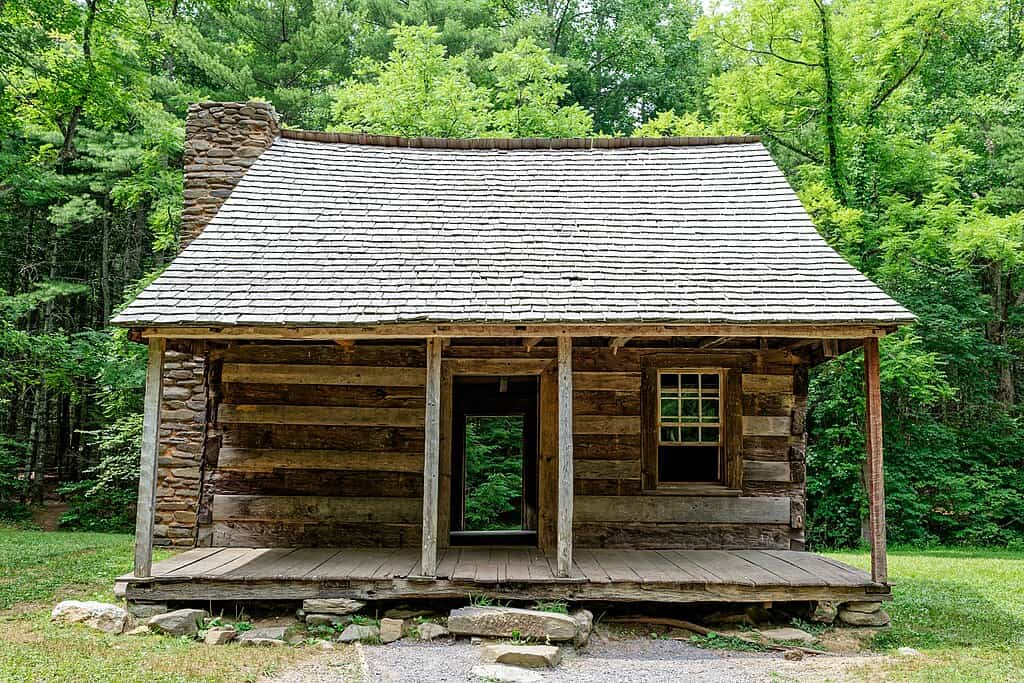
The roof often completes the picture. A steeper pitch handles mountain rain without fuss. Shake shingles split from local timber were common and worked well. Tin arrived later and cost more, often pointing to improved cash flow or strong trade ties. Slate saw even less use at these elevations, though it appears on a few later buildings.
Look at the roof beside the chimney and the corners. All three details work together to show how the home came to be.
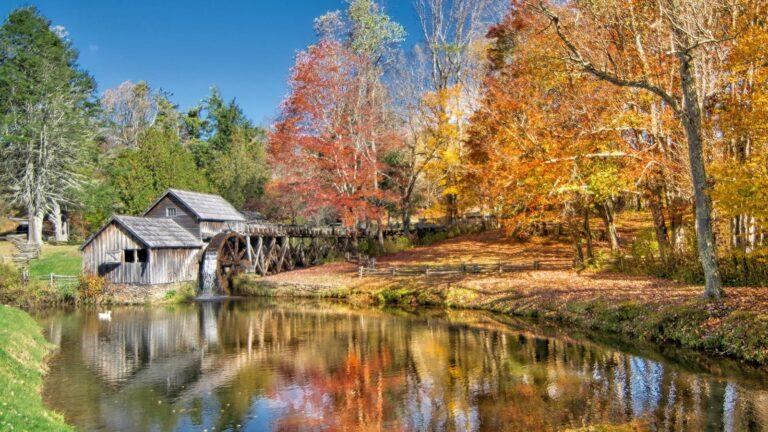
The Matthews Cabin at Mabry Mill: A Working Example of an Appalachian Cabin
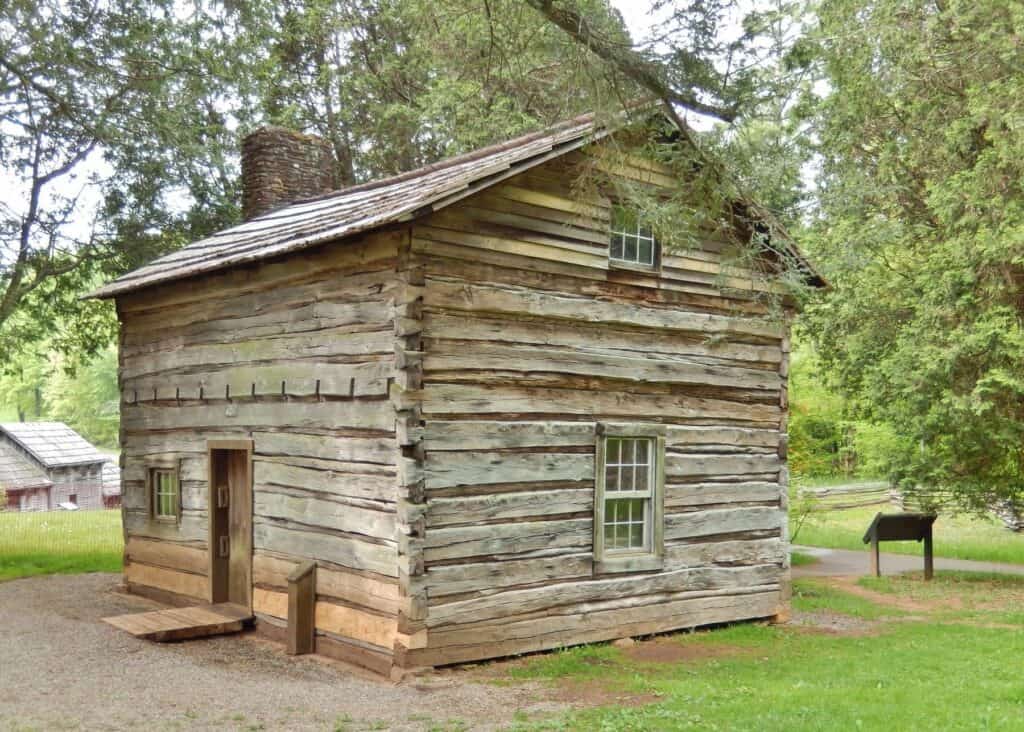
The Matthews cabin at Mabry Mill gives visitors a chance to put all this into practice. At first glance, it blends into the mill grounds. Spend a moment with it, and the structure starts to speak.
The chimney sits at one end of the cabin, built of fieldstone shaped with a steady hand. The stones fit tight, and the stack rises cleanly. They weren’t working with scrap or haste. They took the time to do it right.
The logs carry the next part of the story. Many are hewn on at least one face, suggesting a builder who knew the value of a smooth interior wall. The hewing marks show deliberate strokes. They’re not decorative; they’re the sign of someone shaping the home with an eye toward comfort.
“Once you know what to look for, the Matthews cabin stops being scenery and starts being a story.”
The corners tighten the picture. The joints fit well, and the logs sit flush. You can tell the builder cared about keeping wind out and heat in. A rushed cabin never lines up that well.
The roof, with its modest pitch and weathered shakes, confirms the rest. It follows a pattern familiar in the highlands. The shakes lie in tight, overlapping rows, a testament to long hours of handwork.
Taken together, the chimney, logs, corners, and roof sketch the life of a family who lived with purpose. They weren’t wealthy, but they weren’t drifting either. They built a place meant to last, and the cabin still stands with enough original character to let anyone read its story.
A New Way to Look at Appalachian Cabin Homes
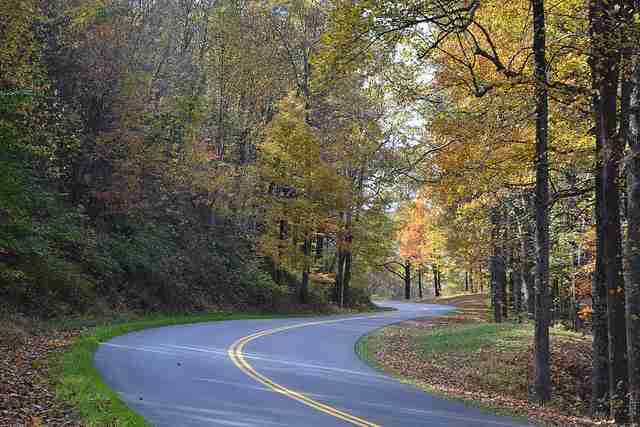
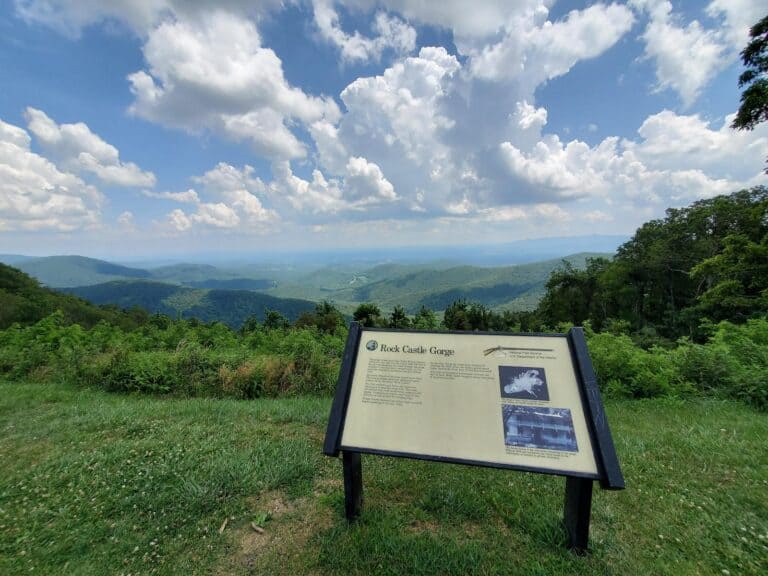
The next time you pull off at a Parkway overlook and spot an Appalachian cabin tucked into the trees, take a moment to study the chimney. Look at the stones or bricks. Look at the cabin corners and the roofline. Once you know what you’re seeing, the home stops being scenery. It becomes a record of choices and work from people who helped shape these mountains.
The cabin stands still, but its story keeps speaking. The chimney carries most of that story, waiting for someone to read it.
More Blue Ridge Travel
Find more travel stories, routes, and small-town stops on the Blue Ridge Travel page.
View the Blue Ridge Travel Collection here
Enjoying Blue Ridge Tales? I hope so. If you’d like to help keep the site ad-free and the stories rolling, you can buy me a coffee.
To stay connected, subscribe to my Blue Ridge Tales newsletter, and have stories and updates delivered once a month to your inbox.