German POWs in the Blue Ridge: Work, Not War
An installment in our Appalachian History and Culture series.
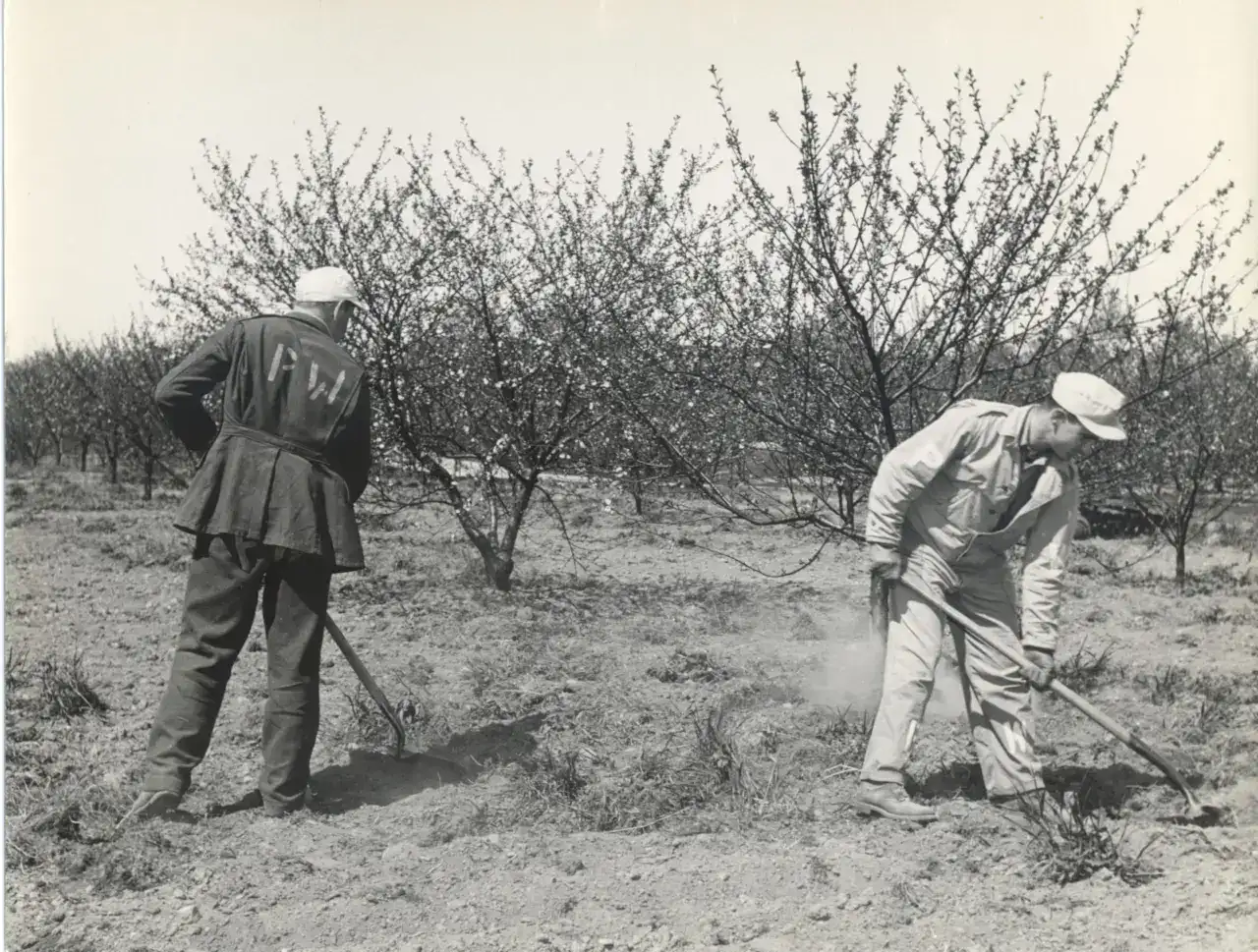
War II. Image: Public domain.
A farm truck pulls up at the edge of an orchard in the Shenandoah Valley. Men climb from the back wearing dusty work clothes stenciled with large white letters:
PW: Prisoner of War
A few local workers pause long enough to look them over. Then the ladders come down, buckets are handed out, and the day’s picking begins.
Most folks picture German POWs in fenced compounds far from American life. Yet on the American home front, POW camps became part of a broader wartime landscape of confinement, labor, and federal control. In the Virginia mountains, that national system turned into a local reality. German POWs in the Blue Ridge spent part of World War II working orchards, cutting corn, clearing timber, and helping keep mountain farms running while local men fought overseas. Their presence showed how a global war could become part of the routines of harvest, road work, and rural survival.
The arrangement felt strange at first. The war filled newspapers, movie theaters, and radio broadcasts with images of Nazi Germany as the enemy. Then the enemy appeared in the back of a farm truck carrying lunch tins and work gloves, and in parts of the Shenandoah Valley and Blue Ridge that sight soon became part of harvest routine.
Wartime Labor Shortages Reached the Blue Ridge
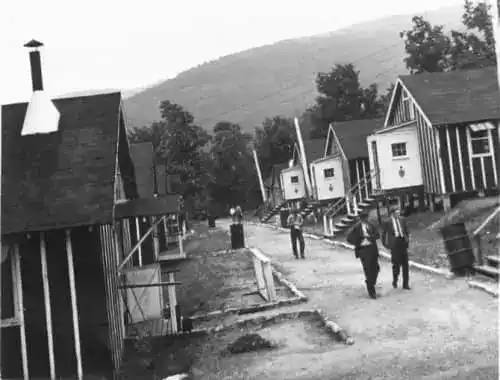
By 1944, labor shortages had become serious across much of rural Virginia. Apple growers around Waynesboro and Augusta County needed workers badly enough that the federal government assigned German POW labor crews to farms, canneries, and forestry projects throughout the region. Some prisoners came from branch camps like Camp Lyndhurst near Sherando Lake, a former Civilian Conservation Corps camp in the Blue Ridge foothills. As the National Park Service notes in its overview of wartime incarceration on the home front, the federal government transported captive enemies from overseas battlefronts to camps in the United States, where they became part of daily wartime life far from combat.
Much of the work depended on timing. Apples had to be picked before weather turned, and corn had to come in when it was ready rather than when labor became available. During harvest season, delays could cost growers an entire year’s income. In the Shenandoah Valley, where orchards and small farms already ran on tight margins, wartime labor shortages turned POW crews from an oddity into a practical solution.
By the later war years, the sight of POW labor details had become less startling in some parts of the region. Orchard owners needed crops harvested, sawmills needed labor, and mountain communities adjusted to a wartime arrangement that linked local work to national policy.
German POWs Worked Orchards, Forest Roads, and Farm Fields
The labor crews moved across the region with the season and the need. One week a group might thin fruit in an orchard outside Waynesboro. A few days later, the same men could be loading grain, repairing drainage ditches, or clearing brush along forest roads near Sherando Lake.
Some local farmers remembered how skilled certain prisoners were with tools. Men who had worked farms in Germany adapted quickly to orchard ladders, wagons, and livestock routines in Virginia. Others struggled with unfamiliar crops, mountain weather, or the pace of harvest. The Blue Ridge could be rough country even for folks who knew it well.

The forestry work around Sherando Lake carried its own demands. Prisoners cleared undergrowth, maintained fire roads, and worked steep terrain first opened during the CCC years. The mountains visitors now experience as recreation areas were still working landscapes then, expected to produce timber, support tourism, and remain accessible despite wartime shortages.
Unlike the massive prison compounds many people imagine today, some Blue Ridge work details looked surprisingly ordinary from the road. A handful of men stood in orchard rows or moved slowly across a hayfield while a truck waited nearby. From a distance, it could resemble any other wartime farm crew until someone noticed the white PW letters painted across jackets and trouser legs.
Guards, Farmers, and Daily Contact
One of the most striking features of the Blue Ridge POW labor program was how little separation often existed between prisoners and the folks around them. In some areas, a single guard supervised an entire work crew, and farmers occasionally transported prisoners to job sites and spent full days beside them in orchards or fields.
That arrangement made more sense in the mountains than it might elsewhere. Roads were limited, communities were small, and escape into unfamiliar country without transportation, money, or local support was harder than it sounded. Daily proximity shaped local impressions in ways propaganda alone could not.

Routine softened some of the initial tension. Folks who expected dangerous enemies sometimes instead encountered tired young men carrying ladders and work gloves. Prisoners earned small amounts of canteen scrip for their labor and spent it on cigarettes, candy, or soft drinks back at camp. On the farms, conversations often remained limited by language barriers, but repeated contact encouraged closer observation than wartime stereotypes allowed.
When the Enemy Became Familiar
Reactions varied from place to place. Some locals remained deeply suspicious throughout the war. Others treated the labor crews with a practicality that, in some cases, turned into familiarity. In parts of the Shenandoah Valley, Mennonite and Brethren families were remembered for treating prisoners with unusual kindness, sometimes inviting them to meals despite official discouragement of social contact.
That didn’t mean folks forgot the war. Newspaper headlines still carried reports from Europe and the Pacific. Local families still had sons overseas. Gold stars still appeared in windows.
But daily life has a way of absorbing unusual situations once they settle into routine. In the Blue Ridge, POW labor became part of how wartime necessity altered local relationships as well as local work.
The War Arrived in Work Clothes
For most folks in the region, World War II arrived through newspaper headlines, ration books, telegrams, and empty seats at family tables. The fighting happened an ocean away. Yet in places like Augusta County and the Shenandoah Valley, the war also came much closer to home. It appeared in orchard rows, forestry camps, and the backs of work trucks climbing mountain roads before daylight. As on other parts of the American home front, wartime mobilization and confinement reshaped ordinary landscapes in ways that seemed temporary at the time but left a lasting mark.

That reality still surprises many people today. German POWs in the Blue Ridge were never present in the numbers seen at the country’s largest camps, but their labor became woven into daily life across parts of rural Virginia during the final years of the war. They were visible enough to matter locally, yet familiar enough in some communities that work trucks no longer stopped the day.
After the war, the prisoners were repatriated, the camps closed or returned to other uses, and the orchards and forest roads remained. Families carried the memory quietly, often in small stories about “the German boys” who once worked nearby.
Most travelers passing through the Blue Ridge today would never know those scenes unfolded there at all. Remembering them now does more than recover an overlooked episode. It shows how the American home front was shaped not only by sacrifice and production, but also by confinement, compromise, and the quiet transformation of ordinary places.
More Appalachian History & Culture
Find more stories from the region’s past on the History and Culture page.
Appalachian History and Culture Collection
Enjoying Blue Ridge Tales? I hope so. If you’d like to help keep the site ad-free and the stories rolling, you can buy me a coffee.
To stay connected, subscribe to my Blue Ridge Tales newsletter, and have stories and updates delivered once a month to your inbox.