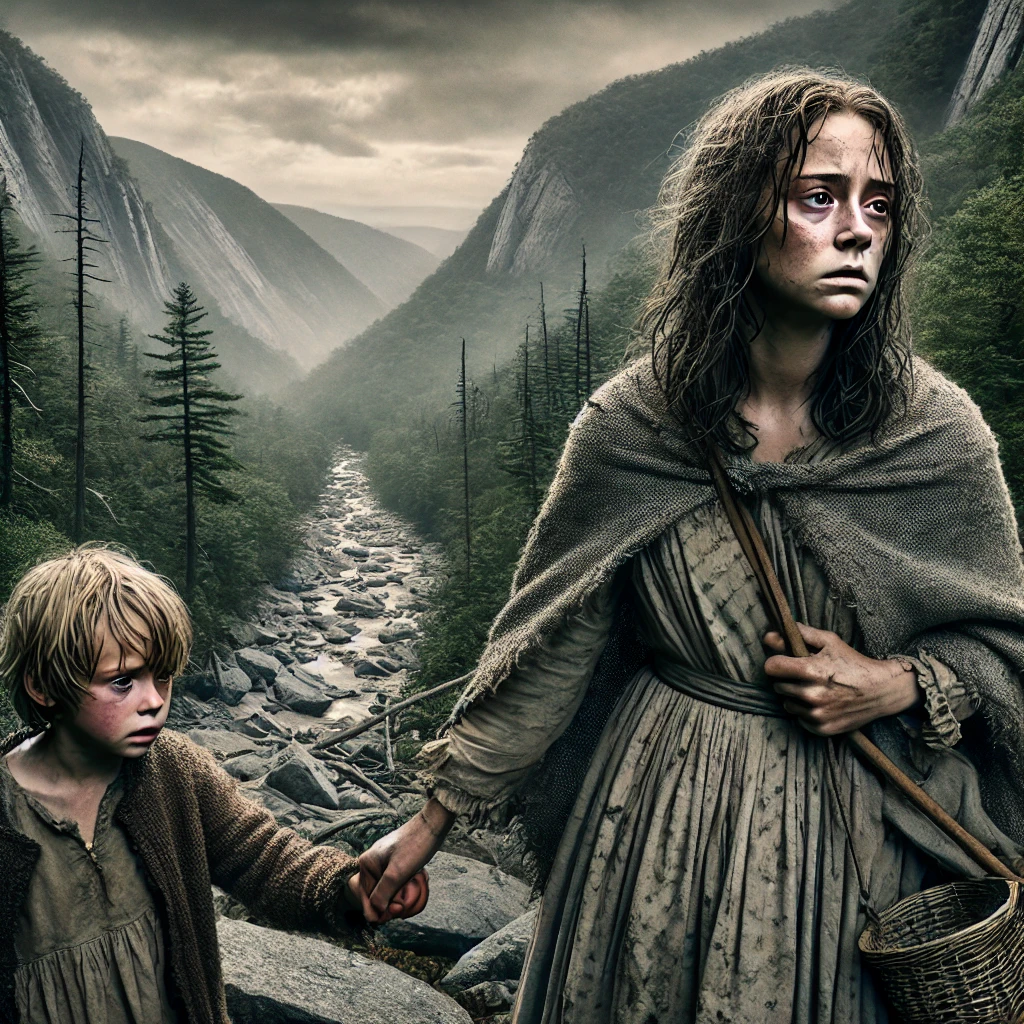
The Curse of Ivanhoe: When a Town Began to Sink
An installment in our Folklore & Legends series

The Fourth of July arrives early in Ivanhoe.
By midafternoon, lawn chairs begin appearing around the Jubilee Park and Horse Show Grounds. Families claim their spots for the evening festivities. Children drift between food stands while volunteers make last-minute preparations. Before the day is over, much of the community will gather for a celebration that residents have proudly called the Jubilee for generations.
Nothing about the scene suggests a town living under a curse.
Yet visitors to Ivanhoe will hear that story before long.
According to local tradition, a preacher named Robert Sheffey once stood on a nearby hillside, shook the dust from his shoes, and condemned the town for its behavior. The earth, he warned, would one day swallow Ivanhoe.
It’s an odd story to encounter amid laughter, music, and neighbors greeting one another across picnic tables.
But maybe that’s why the story endured.
For more than a century, residents have repeated the tale as sinkholes opened, industries closed, and families moved away. Whether anyone believes the curse today is beside the point. The more compelling question is why so many people came to link Ivanhoe’s fate to the words of a mountain preacher.
The Preacher on the Hill
Robert Sayers Sheffey was one of the best-known Methodist circuit riders in the mountains of Southwest Virginia during the nineteenth century. Born in Wythe County on July 4, 1820, he spent much of his life traveling the region on horseback, preaching in churches, homes, and camp meetings. Friends admired his deep faith. Critics sometimes found him blunt and unconventional. Either way, people who met him seldom forgot him.

Sheffey’s ties to the area ran deep. He grew up close enough to present-day Ivanhoe that many residents would consider him a hometown figure.
According to local tradition, Sheffey was troubled by what he saw in Ivanhoe during its boom years. The town’s mines and industries brought jobs and prosperity, but they also brought saloons, gambling, and the rough behavior often associated with fast-growing company towns.
The legend says that after one disappointing visit, Sheffey condemned the community. Some versions place the event on Painters Hill. Others tell it differently. As with many pieces of Appalachian folklore, the details vary depending on who is telling the story.
What stays consistent is the warning.
Sheffey supposedly declared that Ivanhoe would one day sink into the earth.
Whether it happened exactly as remembered is impossible to know. The story passed from one generation to the next long before it appeared in print. Yet the tale endured and became the best-known piece of folklore associated with the town.
Residents would later witness events that seemed to give the legend a life of its own.
When the Ground Started Giving Way
For years, the story of Sheffey’s curse remained just that, a story.
Then the ground began to change.
Ivanhoe sits in a region shaped by both geology and industry. Beneath the town lie limestone formations that are naturally prone to sinkholes. Decades of zinc, lead, and iron mining further altered the landscape below the surface.

Image: VA State Parks CC 2.0
Over time, holes appeared where solid ground was expected. Roads cracked. Yards settled. In some cases, sinkholes swallowed portions of private property. Houses were damaged. Residents learned that the earth beneath their feet wasn’t as stable as it appeared.
For local residents, the experience was less geological than personal.
Generations had repeated the Sheffey story. Now, folks could point to places where the ground had literally given way.
Whether they believed the curse or not, the association was difficult to ignore.
The sinkholes kept the old story alive. They also prepared the way for a broader interpretation of the legend as other challenges began reshaping the community.
A Different Kind of Collapse
The sinkholes kept the legend alive, but they were only part of the story.
The greater challenge came when the industries that built Ivanhoe began to disappear.
During its boom years, the town was far more than a small mountain community. Mining operations, processing facilities, and the railroad provided steady work for generations of local families. Like many Appalachian towns, Ivanhoe grew around the promise of natural resources and the jobs they created.
That promise didn’t last forever.

Image: Pubic domain.
As mines closed and industrial operations scaled back or shut down, the community’s economic foundation began to erode. Families moved elsewhere in search of work, businesses struggled, and buildings that once supported a thriving industrial town stood empty or disappeared altogether.
Residents who had watched the ground sink now found themselves watching something else vanish as well.
The changes didn’t happen at once. They arrived gradually, year by year, until many longtime residents could look around and see a town very different from the one they remembered.
It was during this period that the old story took on a broader meaning.
The curse no longer seemed to describe only sinkholes and unstable ground. For some, it became a way of talking about a series of losses that felt connected. The legend offered a familiar story at a time when the future seemed increasingly uncertain.
History provides more practical explanations. Markets changed. Industries evolved. Companies moved on. The same forces that reshaped communities across Appalachia left their mark on Ivanhoe.
Even so, the old story remained.
Why People Remembered the Curse
The story survived because it connected experiences residents could see with their own eyes. The ground gave way in unexpected places. The town changed.
The tale tied those experiences together. Whether residents believed the story literally was beside the point. Mention the curse, and folks instantly understood what was being discussed.
In Ivanhoe, the curse became shorthand for hardship and change. The story gave people a way to talk about events that were often difficult to explain and hard to accept.
Like many Appalachian stories, the tale endured because it stayed useful.
What makes the Ivanhoe story unusual isn’t the curse itself.
It’s what happened next.
The Town That Stayed
The community never allowed the legend to become its final chapter.
The legend offers one way of understanding Ivanhoe’s history.
The town itself tells a more complicated story.

Image courtesy of Ivanhoe Civic League.
For all the attention given to Sheffey’s warning, generations of residents spent far more time building lives than worrying about curses. They worked in the mines and plants, raised families, attended church, coached ball teams, and gathered for community events. The story remained in the background, resurfacing whenever a sinkhole opened or another setback reminded people of the old legend.
What endured wasn’t the curse itself, but the habit of community.
That spirit is most visible during the annual Fourth of July Jubilee. The celebration doesn’t ignore the town’s history. If anything, it acknowledges it. People remember the prosperous years, the difficult years, and the stories that accompanied both. Yet the gathering is ultimately less about looking backward than reaffirming a shared connection to place.
Each Fourth of July, families gather at the Jubilee Park and Horse Show Grounds. Visitors hear stories about Robert Sheffey and the famous curse.
They also encounter another story.
One about neighbors who remained connected to one another through decades of change.
A legend warned that Ivanhoe would sink.
The town chose a different ending.
More Appalachian Folklore
See more mountain legends, local tales, and story traditions on the Folklore page.
Appalachian Folklore and Legends Collection
Enjoying Blue Ridge Tales? I hope so. If you’d like to help keep the site ad-free and the stories rolling, you can buy me a coffee.
To stay connected, subscribe to my Blue Ridge Tales newsletter, and have stories and updates delivered once a month to your inbox.