
The Mountain Pantry: Feeding a Family Through Lean Weeks
An installment in our Appalachian Foodways series

Some meals are remembered because they were extravagant. Others are remembered because they kept the household steady when things tightened up.
By the end of the week, the mountain pantry could look thin. The flour bin sat lower than it had a few days earlier. Potatoes in the cellar needed to be used soon. A jar or two of beans still waited on the shelf, and there was usually bacon grease beside the stove if somebody remembered to save it after breakfast. None of this meant there would be no supper. It simply meant somebody in the kitchen had to think ahead a bit.
That kind of thinking shaped mountain kitchens for generations. Gardens had seasons. Payday didn’t always arrive at the right moment. Winter stores sometimes ran low before spring planting caught up. Unexpected company showed up at the table. Children kept growing whether the pantry was full or not.
The answer was rarely elaborate cooking. Mountain kitchens depended more on timing, planning, and knowing how to stretch ingredients across several meals. Beans simmered slowly while biscuits baked nearby. Fried potatoes filled empty places on the plate when meat ran short. A spoonful of saved grease could flavor an entire skillet. What mattered most wasn’t variety but knowing how to keep the table steady from one day to the next.
The goal wasn’t abundance. The goal was continuity.
A good mountain cook knew how to look at what remained in the pantry and still see supper.

The Ingredients That Carried a Household
Flour stayed near the center of that system because it adapted so easily. A bowl of biscuit dough mixed quickly by hand could become supper before dark. The same flour thickened gravy, turned broth into dumplings, or became pie crust when fruit was available. Cornmeal worked much the same way. Beans waited patiently in crocks and jars until somebody set them to simmer.
None of these foods looked impressive sitting on the shelf. Together, though, they gave a household options.
Near many stoves sat a coffee can or crock filled with bacon drippings saved after breakfast. A spoonful in the skillet helped potatoes brown better and gave gravy flavor when there was little meat left in the house. Onions hung nearby in braids. Shelves held canned vegetables, dried apples, pickles, and preserves put up during the summer garden season.
What made these foods valuable wasn’t rarity or expense. They kept well, stretched easily, and worked together in different combinations depending on what remained in the mountain pantry that week.
Stretching a Meal Without Looking Like It
A pan of biscuits on the table changed the feel of a meal immediately. Soup beans seemed heartier beside cornbread. Fried potatoes filled empty places on the plate. Dumplings turned a thin broth into something that felt substantial enough to carry people through the evening.
Mountain cooks understood that fullness involved more than quantity. Hot food mattered. Bread mattered. Gravy mattered. Texture mattered too. A biscuit with a browned top and soft middle made supper feel settled, even when supplies were running low.

Much of this depended on knowing how to use small amounts carefully. A little grease flavored an entire skillet. Leftovers rarely stayed leftovers for long. Beans became soup the next day. Potatoes became hash before daylight work began. Cold biscuits warmed beside the stove for breakfast.
Most adults at the table already understood what was happening. Children often did not.
The Quiet Mathematics of the Table
Somebody always knew how much flour remained in the bin. Somebody noticed the bean jars getting fewer on the shelf or the potatoes beginning to sprout in the cellar. Somebody knew payday was still several days away or that winter had stretched longer than expected.
Usually, none of this became conversation at the table.

Instead, supper simply adjusted. Biscuits appeared more often. Gravy stretched thinner across the plate. Adults quietly took less without making a point of it. Children were served first because growing children needed the food, but few families announced that decision out loud. It simply happened.
What many children remembered later wasn’t scarcity but consistency. Supper still arrived at the usual hour. The stove stayed warm. Someone still asked for another spoonful of gravy or one more biscuit.
Years later, my mother summed up that kind of kitchen management in a single sentence:
“We never went hungry, even if all we had were biscuits.”
As a child, I heard that as reassurance. Looking back, I understand it differently. Biscuits weren’t the whole meal. They were the bridge that carried the household through another evening when the pantry had grown thin.
Why Biscuits Meant Security
Few foods represented the mountain pantry better than biscuits. They required little, came together quickly, and fit beside almost anything already on the table. As long as there was flour in the pantry, the kitchen still had options.
The rhythm became familiar in many households. Flour sifted into a bowl. Lard or bacon grease worked in by hand. Biscuits went into a hot oven while beans simmered nearby or potatoes browned in a skillet. Experienced cooks rarely measured much of anything. They adjusted the dough by feel depending on the weather, the stove, or how many people might walk through the door before supper.
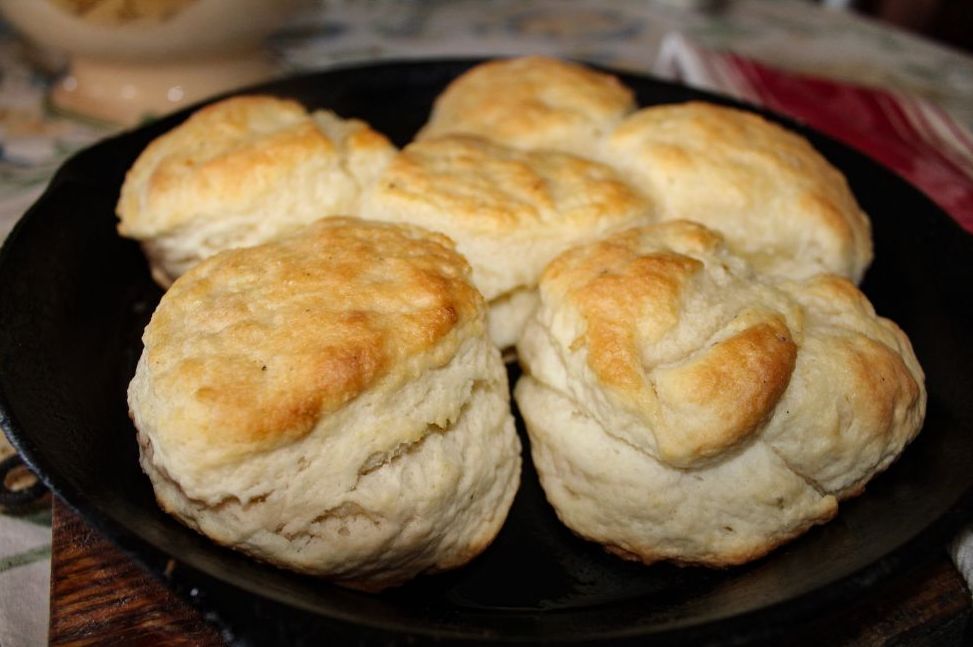
That may explain why biscuits remain tied so closely to memory in mountain cooking. People remember the smell of them baking or the sound of a knife splitting one open at the table. What they often remember less clearly is the quiet skill behind them.
The Pantry Was Never Empty
To modern eyes, some mountain kitchens might have looked sparse. Meals repeated themselves more often. Biscuits appeared several nights in a row without anybody thinking much about it.
But the people working in those kitchens judged the pantry differently. If there was still flour for biscuits, beans for the pot, potatoes in the cellar, or grease beside the stove, there was still enough to work with.
Mountain mothers learned how to stretch ingredients without making the table feel bare. Most of that knowledge was never written down. Children learned it by watching suppers appear night after night, even near the end of winter or before payday arrived.
Many of those meals survive today as comfort foods. Biscuits and gravy, soup beans, fried potatoes, cornbread, and dumplings still appear in kitchens and restaurants across the mountains. What often disappears from memory is the quiet skill behind them.
Somewhere near the stove sat a flour bin that never seemed completely empty, and by suppertime there was usually a fresh pan of biscuits cooling on the table.
More Foodways Stories
Explore the dishes, tools, and kitchen traditions that shaped mountain life on the Foodways page.
Appalachian Foodways Collection
Enjoying Blue Ridge Tales? I hope so. If you’d like to help keep the site ad-free and the stories rolling, you can buy me a coffee.
To stay connected, subscribe to my Blue Ridge Tales newsletter, and have stories and updates delivered once a month to your inbox.


